
Written by: The Editorial Team
Published: 31 Oct 2026
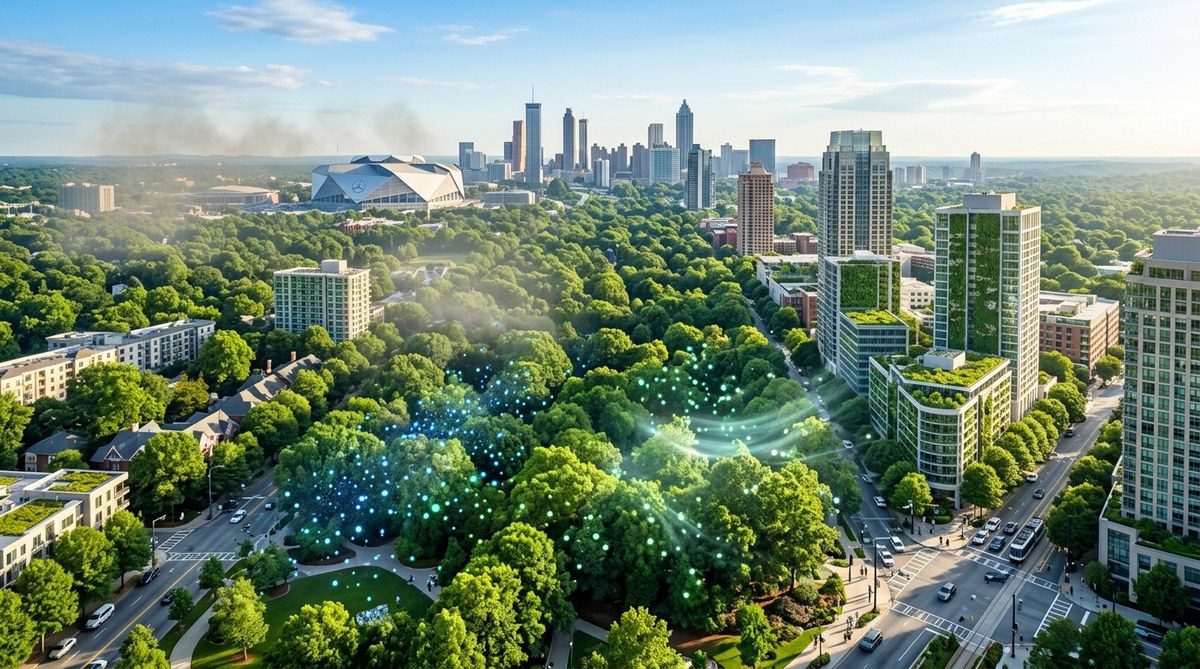
If you have walked under the shade of a large oak in Piedmont Park on a hot summer afternoon, you already know Atlanta’s trees offer relief. But that relief goes far beyond cooling your skin. In 2026, as the city continues to grow, the urban tree canopy is one of our most powerful tools for fighting air pollution. Every leaf is a tiny, natural air filter. And the data shows they are working harder than ever.
Atlanta’s urban tree canopy removes millions of pounds of air pollutants each year, including ozone and particulate matter. In 2026, the city’s trees intercept over 1.2 billion gallons of stormwater and store more than 3 million tons of carbon. Protecting and expanding this canopy is a direct, cost-effective way to improve air quality for every neighborhood.
The Science Behind the Leaves
Trees do not just look nice. They actively clean the air through a process that combines physics and biology. Leaves absorb gaseous pollutants like nitrogen dioxide, sulfur dioxide, and ozone through tiny openings called stomata. At the same time, the rough surfaces of bark and leaves trap microscopic particles, known as PM2.5 and PM10, that can damage human lungs.
This is not a small effect. According to the most recent i-Tree Eco analysis for Atlanta, the city’s trees remove an estimated 22,000 tons of air pollution annually. That is roughly the equivalent of taking over 4 million cars off the road for a year. For a city that ranks among the most congested in the United States, that is a massive public health benefit.
Atlanta’s tree canopy covers about 47 percent of the city. That is a higher percentage than many other major U.S. cities, including New York and Los Angeles. But that number has been shrinking. A 2024 study from Georgia Tech found that Atlanta loses roughly 50 acres of tree cover each year to development. The good news is that local groups and city planners are fighting back with new planting initiatives and stricter tree protection ordinances.
How the Canopy Battles Specific Pollutants
Different trees handle different pollutants. The table below breaks down the major air quality threats in Atlanta and how the canopy responds.
| Pollutant | Source in Atlanta | How Trees Help | Estimated Removal by Canopy (per year) |
|---|---|---|---|
| Ozone (O3) | Vehicle exhaust, industrial emissions | Absorbed through leaf stomata, reducing ground-level smog | 1,100 tons |
| Particulate Matter (PM2.5, PM10) | Construction, traffic, dust | Captured on leaf and bark surfaces; washed to ground by rain | 1,800 tons |
| Nitrogen Dioxide (NO2) | Cars, trucks, power plants | Absorbed and metabolized by leaves | 700 tons |
| Sulfur Dioxide (SO2) | Industrial facilities, older vehicles | Absorbed through leaf surfaces | 300 tons |
| Carbon Monoxide (CO) | Incomplete fuel combustion | Converted during photosynthesis | 100 tons |
The numbers come from peer-reviewed studies and the USDA Forest Service. They show that a mature, healthy tree can absorb up to 48 pounds of carbon dioxide per year. When you multiply that across the estimated 3.7 million trees in Atlanta, the impact is enormous.
Where the Canopy Is Thickest and Thinnest
Tree cover is not spread evenly across Atlanta. Some neighborhoods enjoy a dense, shady canopy. Others, particularly lower-income areas and communities of color, have far fewer trees. This pattern is not random. It reflects decades of urban planning decisions.
A 2025 analysis by the city’s Department of Watershed Management found that neighborhoods south of I-20 have an average tree canopy of just 28 percent. Meanwhile, areas in north Atlanta, like Buckhead, average over 60 percent. This disparity matters because tree cover directly correlates with air quality. Communities with less canopy experience higher concentrations of ground-level ozone and particulate matter.
The city has acknowledged this gap. In 2026, Atlanta’s Tree Conservation Commission is prioritizing planting in underserved areas. The goal is to add 10,000 new trees annually in zones with the lowest canopy coverage. Groups like Trees Atlanta have been doing this work for decades, but the scale is finally matching the need.
A Step-by-Step Guide to Supporting the Canopy at Home
You do not need to be a city planner to make a difference. Here are five practical steps you can take right now to help Atlanta’s urban tree canopy fight air pollution.
-
Plant a native tree on your property. Species like the Southern live oak, red maple, and river birch are well adapted to Atlanta’s climate. They grow faster and live longer than many non-native options. A single large tree can intercept 1,000 gallons of stormwater and remove 10 pounds of air pollutants per year.
-
Protect existing trees during construction. If you are building an addition or a new driveway, mark a clear protection zone around the root systems. Compaction from heavy equipment can kill a tree slowly over several years.
-
Volunteer with a local planting event. Trees Atlanta hosts community plantings from October through March. Each volunteer helps put a new tree in the ground that will clean the air for decades.
-
Advocate for tree preservation ordinances. Attend a neighborhood planning meeting or write to your city council representative. Let them know that tree protection matters to you.
-
Mulch and water young trees. A newly planted tree needs consistent water for its first three years. Proper mulching reduces competition from grass and keeps the soil moist.
Common Mistakes When Caring for Urban Trees
Even well-meaning residents sometimes harm the trees they want to help. Here are the most frequent mistakes and how to avoid them.
- Planting too deep. The root flare, where the trunk meets the roots, should be visible above ground. Burying it can suffocate the tree.
- Using too much mulch. A mulch volcano against the trunk traps moisture and invites rot. Keep mulch two to three inches deep and pull it away from the bark.
- Topping the tree. Cutting off the top of a tree to control height weakens its structure and makes it more vulnerable to disease. Crown reduction should only be done by a certified arborist.
- Choosing the wrong species for the location. A large oak planted under a power line will eventually need severe pruning or removal. Match the tree’s mature size to the available space.
- Ignoring signs of stress. Yellowing leaves, premature leaf drop, or visible pests are signals. Early intervention can save a tree that might otherwise die and release stored carbon.
The Economic Value of Cleaner Air
The benefits of Atlanta’s urban tree canopy go beyond health. They also save money. The city’s trees reduce energy costs by shading homes and businesses. The American Forests organization estimates that Atlanta’s canopy provides over $100 million in annual environmental benefits, including air quality improvement, stormwater management, and energy savings.
Hospitals see fewer asthma cases in neighborhoods with higher tree cover. Schools with shaded playgrounds report lower heat-related absences. Property values increase when streets are lined with mature trees. These are not abstract gains. They are measurable returns on a natural investment.
“Every tree we plant in Atlanta is a long-term investment in public health. The data is clear: neighborhoods with more trees have cleaner air, cooler temperatures, and healthier residents.” – Trees Atlanta, 2026 Annual Report
What the Future Holds for Atlanta’s Canopy
The city has set a goal of reaching 50 percent tree canopy by 2040. That means adding roughly 5,000 acres of new tree cover over the next 14 years. It is an ambitious target, especially given the pressure of new development. But the tools to get there exist.
New satellite mapping technology allows planners to track canopy loss in real time. Grants from the Inflation Reduction Act have funded tree planting in frontline communities. And public awareness is higher than ever. A 2026 survey by the Atlanta Regional Commission found that 78 percent of residents consider tree preservation a top environmental priority.
Still, challenges remain. Invasive species like the emerald ash borer continue to threaten native trees. Climate change is bringing hotter summers and more intense storms, which stress the canopy. And funding for long-term maintenance is never guaranteed.
How to Stay Informed and Involved
Keeping up with the latest data on Atlanta urban tree canopy and air pollution is easier than you might think. The city publishes an annual tree canopy assessment online. You can also follow the work of Trees Atlanta, the Georgia Forestry Commission, and American Forests. These organizations provide planting calendars, volunteer opportunities, and policy updates.
If you want to dig deeper into the science, the i-Tree Eco tool is free and open to the public. You can use it to calculate the environmental benefits of trees on your own property. It is a powerful way to see exactly how much pollution your yard is removing.
Every Leaf Counts in the Fight for Clean Air
Atlanta’s urban tree canopy is not a luxury. It is a vital piece of public infrastructure. It works around the clock, without electricity, to filter the air we breathe. In 2026, the city is at a crossroads. Development pressure is real, but so is the commitment to protect what makes Atlanta special.
The next time you drive down a tree lined street or sit on a shaded porch, remember that those trees are doing more than just looking good. They are scrubbing the air, cooling the pavement, and making the city a healthier place to live. The best way to repay them is to plant more, protect what we have, and never take the canopy for granted.
Was this page helpful?
Our commitment to delivering trustworthy and engaging content is at the heart of what we do. Each fact on our site is contributed by real users like you, bringing a wealth of diverse insights and information. To ensure the highest standards of accuracy and reliability, our dedicated editors meticulously review each submission. This process guarantees that the facts we share are not only fascinating but also credible. Trust in our commitment to quality and authenticity as you explore and learn with us.