
Written by: The Editorial Team
Published: 30 Oct 2026
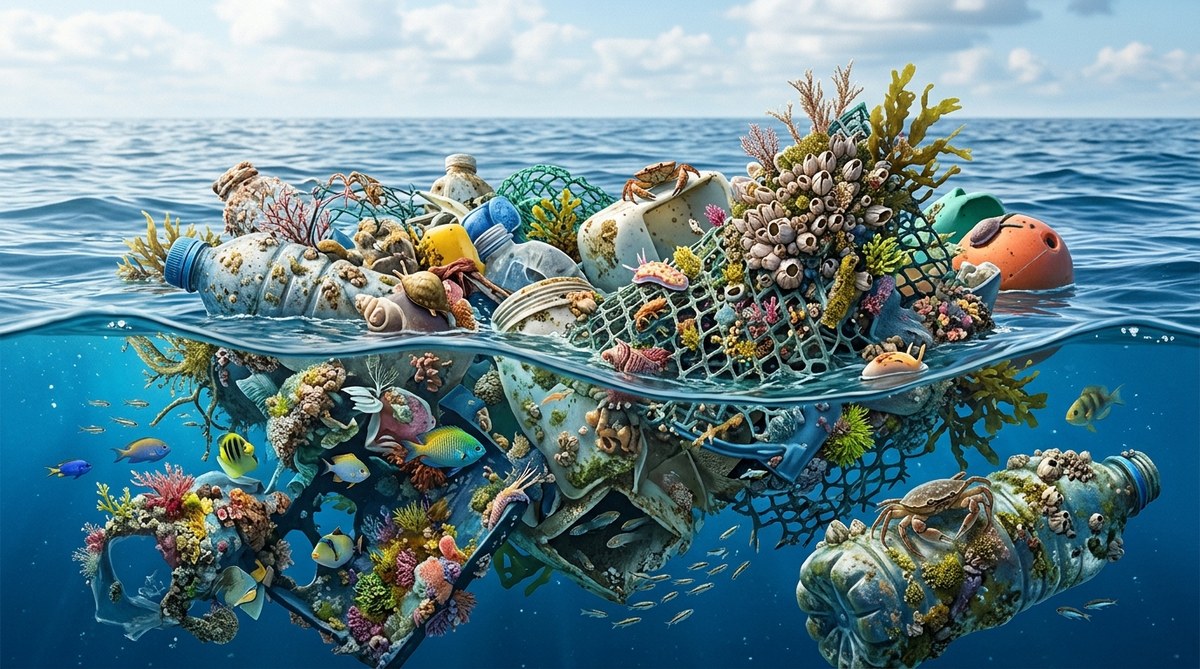
The Great Pacific Garbage Patch has always been described as a floating trash pile, a symbol of our plastic addiction. But something unexpected is happening out there in the North Pacific Ocean. Instead of just being a dead zone, this massive collection of debris has become a home. Coastal species that normally cling to rocks and piers are now living on plastic, hundreds of miles from shore. It is a strange and fascinating twist in the story of plastic pollution. This new floating ecosystem is changing how scientists think about ocean life and the long-term effects of our waste.
The Great Pacific Garbage Patch is no longer just a collection of plastic waste. It has transformed into a unique floating ecosystem where coastal animals like crabs, anemones, and barnacles are thriving. This phenomenon shows that plastic pollution is not just a problem of waste but also a driver of ecological change, creating new habitats that could alter marine food webs and species distribution across the Pacific Ocean.
The Accidental Raft: How Plastic Became a Home
The North Pacific Subtropical Gyre is a slow-moving whirlpool of ocean currents. It pulls in debris from coastlines around the Pacific Rim. For decades, that debris was mostly organic material that would break down. But plastic does not break down. It floats. And it lasts.
Over time, these plastic fragments have accumulated into what we call the Great Pacific Garbage Patch. It is not a solid island you can walk on. It is more like a soup of tiny particles mixed with larger items like fishing nets, buoys, and bottles. What scientists have recently discovered is that this plastic soup has become a raft for life.
Animals that usually live along the coast have hitched a ride on floating plastic. Species like mussels, barnacles, and various types of crabs are now living in the open ocean. They are reproducing and forming communities. This is a completely new type of habitat, one that did not exist before humans started making plastic.
A New Neighborhood for Coastal Species
The species colonizing the garbage patch are not the typical open-ocean drifters. They are coastal organisms. These animals have specific needs. They need a hard surface to attach to. In the ocean, hard surfaces are rare. Plastic provides that surface.
Scientists have found dozens of coastal species living on plastic debris in the patch. Some of the most common include:
- Goose barnacles
- Bryozoans (tiny filter-feeding animals)
- Anemones
- Crabs
- Amphipods (small crustaceans)
These creatures are not just surviving. They are thriving. They are feeding on the abundant plankton in the gyre and using the plastic as a permanent home. This is a major shift. Normally, a piece of driftwood or a pumice stone might carry a few organisms for a short time. But plastic does not sink. It does not rot. It provides a stable platform that can last for years or even decades.
How Does This New Ecosystem Work?
The process of how this ecosystem forms is surprisingly simple. It follows a predictable pattern.
- Plastic debris enters the ocean from rivers, coastlines, and ships. It gets caught in the North Pacific Gyre.
- Microbes and algae form a thin film on the plastic surface. This is called a biofilm. It makes the plastic smell like food to small animals.
- Tiny crustaceans and other small organisms begin to feed on the biofilm. They attach to the plastic.
- Larger animals like crabs and barnacles arrive. They feed on the smaller organisms and use the plastic as a solid base.
- The community grows. Predators like fish and squid are attracted to the area. A full food web starts to form.
This process is happening across the entire garbage patch. The plastic is not just trash anymore. It is a substrate for life. You can see the difference between a natural raft and a plastic one in the table below.
| Feature | Natural Raft (Driftwood, Pumice) | Plastic Raft |
|---|---|---|
| Lifespan | Months to a few years | Decades or centuries |
| Buoyancy | Sinks as it becomes waterlogged | Stays afloat almost indefinitely |
| Surface for life | Limited, breaks down | Extensive, stable |
| Species carried | Mostly open-ocean species | Coastal and open-ocean species |
| Impact on ocean | Natural part of the cycle | Creates new, persistent habitat |
The Double-Edged Sword of a Plastic Ecosystem
This new ecosystem is not a simple good news story. It is a complex ecological shift with both positive and negative consequences.
On one hand, the garbage patch is providing a new habitat for life in the open ocean. This increases local biodiversity in an area that was previously a marine desert. Animals are finding food and shelter where there was none.
"The plastic is not just a problem. It is an experiment in evolution happening in real time. We are watching species adapt to a new environment that we created." - Dr. Linsey Haram, marine ecologist at the Smithsonian Environmental Research Center
On the other hand, this new habitat comes with serious risks.
- Invasive species: Coastal species can now travel across the ocean on plastic. They could reach new islands and coastlines, where they might outcompete native species. This is a major concern for places like Hawaii and the Galapagos.
- Toxins: Plastic absorbs pollutants like PCBs and DDT from the water. When animals eat the plastic or the organisms living on it, those toxins enter the food web. They can move up to fish and eventually to humans.
- False habitat: Animals might be drawn to the garbage patch, thinking it is a good place to live. But the plastic can break into smaller pieces that are easily ingested. Sea turtles, for example, often mistake plastic bags for jellyfish.
What This Means for the Future of Our Oceans
The Great Pacific Garbage Patch ecosystem is a powerful reminder that nature finds a way. But it is also a warning. We are changing the ocean on a fundamental level. The plastic we throw away is not just disappearing. It is becoming part of the marine environment.
Scientists are now studying this phenomenon closely. They want to understand how these new communities will evolve. Will they become permanent fixtures in the ocean? Will they help clean up the plastic by consuming it? Or will they cause more harm by spreading invasive species and toxins?
The answers are not clear yet. But one thing is certain. The garbage patch is no longer just a pile of trash. It is a living, changing ecosystem. And it is here to stay as long as the plastic keeps flowing.
Several actions can help reduce the impact of this new ecosystem.
- Reduce single-use plastics like bags, bottles, and straws.
- Support better waste management systems in coastal communities.
- Participate in local beach cleanups to prevent plastic from reaching the ocean.
- Choose reusable products over disposable ones.
- Advocate for policies that limit plastic production and promote circular economies.
Rethinking Our Relationship with Plastic
The story of the Great Pacific Garbage Patch ecosystem is not just about pollution. It is about unintended consequences. We designed plastic to be durable and long-lasting. We did not design it to become a floating island for crabs and barnacles. But that is exactly what happened.
This should make us pause. Every piece of plastic that enters the ocean has the potential to create new life, but also to disrupt existing life. It is a reminder that our actions have ripple effects we cannot always predict.
The next time you see a plastic bottle or a discarded fishing net, think about where it might end up. It could travel thousands of miles. It could become a home for a crab. Or it could be eaten by a sea turtle. The choice of what happens to it starts with us.
Understanding this new floating ecosystem is the first step. The next step is using that knowledge to make better decisions. We have the power to stop the flow of plastic into the ocean. It will take effort and change, but it is possible. And the creatures of the Pacific, both the old and the new, will be better off for it.
Was this page helpful?
Our commitment to delivering trustworthy and engaging content is at the heart of what we do. Each fact on our site is contributed by real users like you, bringing a wealth of diverse insights and information. To ensure the highest standards of accuracy and reliability, our dedicated editors meticulously review each submission. This process guarantees that the facts we share are not only fascinating but also credible. Trust in our commitment to quality and authenticity as you explore and learn with us.