
Written by: The Editorial Team
Published: 17 Oct 2026
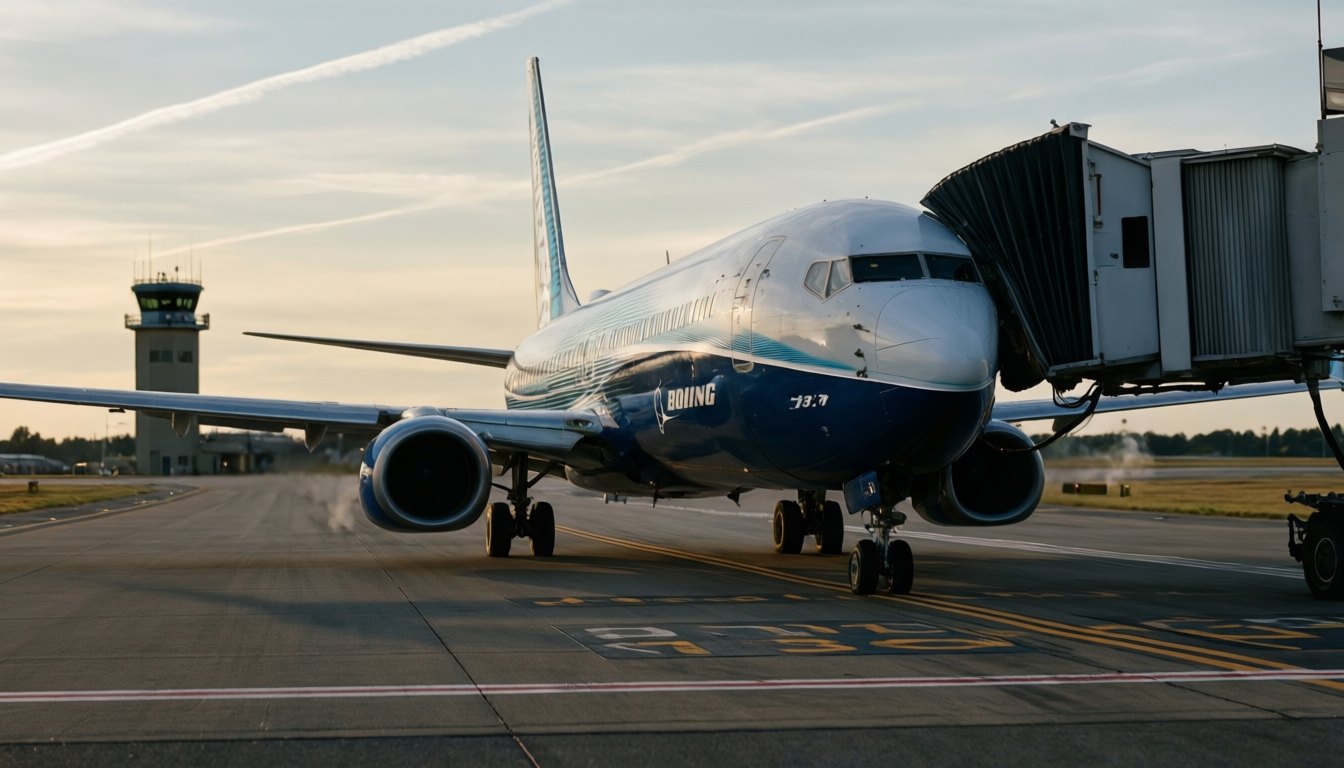
Most people board a plane, find their seat, and give very little thought to the machine keeping them 35,000 feet above the ground. That is completely understandable. But behind every routine flight sits an enormous amount of engineering, regulation, and logistics that the average passenger never sees. These 25 facts pull back the curtain on how commercial aviation really works, from the first bolt on an assembly line to the last landing of a retired jet.
Flight Deck: Key Takeaways
- Commercial aircraft must pass years of certification testing before a single paying passenger boards.
- Fleet age varies widely by airline and region, and passengers can look this up before they fly.
- A jet is tracked by pressurization cycles, not just hours, and retirement often follows economic logic as much as technical limits.
- Fuel can account for 30 to 40 percent of direct operating costs on a long-haul flight.
- Maintenance checks range from quick turnaround inspections to multi-week structural overhauls, all documented and reviewed by regulators.
Before a Single Passenger Boards: Type Certification
Bringing a new aircraft type to market starts with one of the most demanding approval pathways in any engineering field. In the United States, the Federal Aviation Administration issues a type certificate only after an applicant proves, through exhaustive demonstration, that every system on the aircraft meets detailed safety standards. For an entirely new design, this process can take a decade or longer before the first revenue flight departs.
25 Facts Most Passengers Never Think About
- Type certification is not a single test. It involves thousands of individual demonstrations, from structural load tests to engine flame-out simulations at altitude, conducted across years of evaluation.
- A commercial airliner's cabin is not pressurized to sea level. At cruise altitude, the cabin equivalent sits at roughly 6,000 to 8,000 feet above sea level. This is intentional. Pressurizing to full sea-level equivalent would put excessive stress on the fuselage over millions of cycles.
- Wings on a large jet flex considerably during flight. On a Boeing 777, the wingtips can move upward by several feet under normal load. This flex is by design. A rigid wing would be far more vulnerable to stress fractures over time.
- Aircraft are tracked by cycles, not just hours. One cycle equals one pressurization event, meaning one takeoff and landing. Fuselage fatigue accumulates with each cycle. Short-haul jets complete cycles far faster than long-haul aircraft and reach retirement thresholds sooner as a result.
- A narrowbody jet on a busy short-haul route may complete six to eight cycles per day. A widebody on transoceanic routes might complete just one or two cycles in that same period, which is why long-haul aircraft can remain economically viable for more years before hitting cycle limits.
- Fuel is the single largest operating cost for most airlines. On a long-haul flight, fuel can account for 30 to 40 percent of direct operating costs. Even modest improvements in fuel burn per seat translate to hundreds of millions of dollars in savings across a fleet.
- A Boeing 747-400 burns roughly 11 to 12 liters of fuel per kilometer at cruise. That sounds enormous until you divide it by the number of seats. Per passenger, fuel consumption becomes roughly comparable to a small car, which is part of why aviation remains a remarkably efficient form of mass transport at scale.
- Modern aircraft use fly-by-wire controls. Pilot inputs travel through computers that interpret and adjust the signal before moving control surfaces. This prevents pilots from accidentally commanding a maneuver that exceeds the aircraft's structural limits, a genuine engineering safety layer built into every flight.
- The black box is rarely black. Flight data recorders and cockpit voice recorders are required to be bright orange and equipped with underwater locator beacons. The name stuck from early aviation history, but the color has not.
- Aircraft tires are inflated to around 200 psi. A passenger car tire runs at roughly 32 psi. The extreme pressure allows aircraft tires to absorb the enormous kinetic energy of landing without deforming catastrophically, and they are designed to spin up from zero to landing speed in a fraction of a second.
- Jet engines must withstand bird strikes without catastrophic failure. Certification requires that an engine continue to operate after ingesting a large bird, defined by weight class, without catching fire or shedding debris that could damage the aircraft structure. Regulators specify the test conditions in detail.
- Jet fuel freezes at a temperature lower than outside air at cruise altitude. At 35,000 feet, outside temperatures can reach minus 56 degrees Celsius. Jet-A fuel freezes at around minus 40 degrees Celsius. On long flights over cold polar regions, crews monitor fuel temperature closely to prevent fuel feed problems.
- Fleet age differs far more across airlines than most passengers realize. Low-cost carriers in competitive markets often operate newer fleets to maximize fuel efficiency. Airlines in some developing markets fly jets averaging 18 to 20 years in service. Passengers curious about aircraft age on a specific flight can check this before they depart, using publicly available registration data.
- Aircraft windows have three panes, not two. The innermost pane has a small hole drilled into it. This bleed hole regulates pressure distribution so the outer structural pane carries the load, not the inner pane passengers press their faces against.
- Twin-engine jets can fly routes that cross areas with no diversion airport for 180 minutes. Extended twin-engine operational performance standards certification allows this. It replaced the older rule that required four-engine aircraft for long overwater routes, which is why the Boeing 777 and Airbus A350 now dominate transoceanic flying.
- Autopilot does not fly the entire flight unattended. Flight crew actively monitor autopilot systems, manage fuel balance, communicate with air traffic control, and handle any deviation from the planned route. Autopilot handles the mechanical task of holding course and altitude with precision, not the decision-making.
- Airlines routinely carry more fuel than regulations require. Dispatch planners add contingency fuel beyond the minimum for weather diversions, holding patterns, and unexpected routing changes. The captain can also request additional fuel before departure if the situation warrants it.
- Airframe life limits are expressed in cycles for pressurized structures. Once a fuselage reaches its certified cycle limit, the aircraft must enter a certified life extension program or be retired. There is no flying past the limit without regulatory approval of a structural reassessment and targeted modifications.
- Aircraft paint adds surprising weight. A full paint job on a large widebody can add 500 to 600 kilograms. Some carriers strip paint entirely and fly in bare metal or primer finish to reduce fuel burn, particularly during periods of high fuel prices.
- Retired jets do not always go straight to the scrapper. Many are parked in arid desert storage facilities where dry air slows corrosion. They sit as a source of spare parts for the same aircraft type still operating elsewhere. A parked jet can keep a dozen active jets flying for years.
- The retirement decision is economic as much as it is technical. A newer generation aircraft might burn 15 to 20 percent less fuel on the same route. When fuel savings on new aircraft outweigh the capital cost of replacement, the economics of keeping older jets marginal, regardless of how many cycles remain on their airframe limit.
- Fleet turnover has accelerated compared to 30 years ago. In the 1990s, jets routinely flew for 25 to 30 years before retirement. Modern aircraft design still allows for similar service lives, but fuel economics tend to push retirement earlier now that more efficient replacement types are continuously entering service.
- Leasing companies own a majority of the world's commercial jet fleet. Airlines increasingly prefer to lease rather than own, which allows them to adjust fleet composition as routes change and to return older aircraft without carrying depreciation costs on their balance sheet. This has changed the entire economics of aircraft retirement.
- Some aircraft types have had production runs measured in decades. The Boeing 737 family, first flown in 1967, has remained in continuous production and is still being built in updated form today. Its basic fuselage cross-section is essentially unchanged from that original design, even as the avionics, engines, and aerodynamics have been substantially revised across generations.
- Aircraft registration numbers are public record in most countries. Every commercial jet flying in registered airspace has a tail number linked to public regulatory databases. This means anyone with the tail number of a specific flight can trace the aircraft's registration history, operator changes, and in many cases its age and maintenance status.
The Inspection Layers That Keep Every Jet Airworthy
One fact that deserves its own context is the maintenance check hierarchy. Commercial aircraft do not just receive a visual inspection between flights. There is a structured series of checks, each progressively more involved than the last. The specific naming conventions vary by airline and maintenance program, but the general structure follows a well-established industry pattern.
- Transit checks happen between flights and cover fluid levels, visible damage, and the status of critical systems. They take minutes.
- Daily checks occur at least once every 24 hours and take around an hour to complete by a qualified maintenance technician.
- Intermediate checks are scheduled every few hundred flight hours and can ground an aircraft for one to three days of more thorough inspection.
- Heavy maintenance visits strip the interior, inspect structural components beneath the floor and inside the fuselage walls, and overhaul or replace major systems. These take several weeks and represent the most intensive look an aircraft receives during its service life.
Every check is documented in meticulous detail and reviewed by aviation regulators. Maintenance records follow an aircraft through its entire service life and transfer to any subsequent owner or operator. No gaps in documentation are permitted.
How the Full Lifecycle of a Commercial Jet Unfolds
From first flight to final retirement, a commercial aircraft moves through a long sequence of institutional attention. A new aircraft type begins with years of development and certification. It enters service and starts accumulating cycles and hours. Regular maintenance keeps it airworthy through each phase. At some point, whether driven by cycle limits, rising maintenance costs, or the economic pressure of more efficient replacement aircraft, the operator evaluates whether to continue flying it or retire it.
Aircraft that leave one operator's fleet often change hands. Leasing companies may move them to operators in other markets where fuel costs or passenger expectations differ. Some aircraft are parted out for components, keeping identical types in service elsewhere. A very small number become museum pieces or training aids. The majority eventually get scrapped, with aluminum and other materials recycled into new production.
The entire lifecycle of a single airframe can span three decades, involve multiple operators across different continents, and generate maintenance documentation running to tens of thousands of pages. That is a remarkable institutional trail for an object most passengers never give a second thought to as they settle into their seat and look out the window.
What the Passenger View Misses About Every Flight
Aviation generates an extraordinary volume of data. Every flight produces records of engine performance, fuel consumption, system states, and atmospheric conditions encountered. Maintenance generates inspection logs. Regulatory filings track fleet composition. These records exist not as bureaucratic formality but as the foundation of a safety system that has made commercial aviation the statistically safest form of mass transportation in history.
None of this is visible from a boarding pass. The passenger's experience of aviation is a seat, a window, and a destination. The operational reality behind that experience involves engineering margins calculated to handle conditions far beyond anything a routine flight encounters, regulatory oversight that follows the aircraft from assembly to retirement, and economic calculations that run continuously in the background of every dispatch decision.
That gap between what passengers experience and what is actually happening is, in its own right, one of the most significant facts about commercial aviation. The system is designed to look effortless from inside the cabin. The scale of effort required to make it look that way is one of the genuine engineering achievements of the modern era.
Was this page helpful?
Our commitment to delivering trustworthy and engaging content is at the heart of what we do. Each fact on our site is contributed by real users like you, bringing a wealth of diverse insights and information. To ensure the highest standards of accuracy and reliability, our dedicated editors meticulously review each submission. This process guarantees that the facts we share are not only fascinating but also credible. Trust in our commitment to quality and authenticity as you explore and learn with us.