
Written by: The Editorial Team
Published: 18 Oct 2026
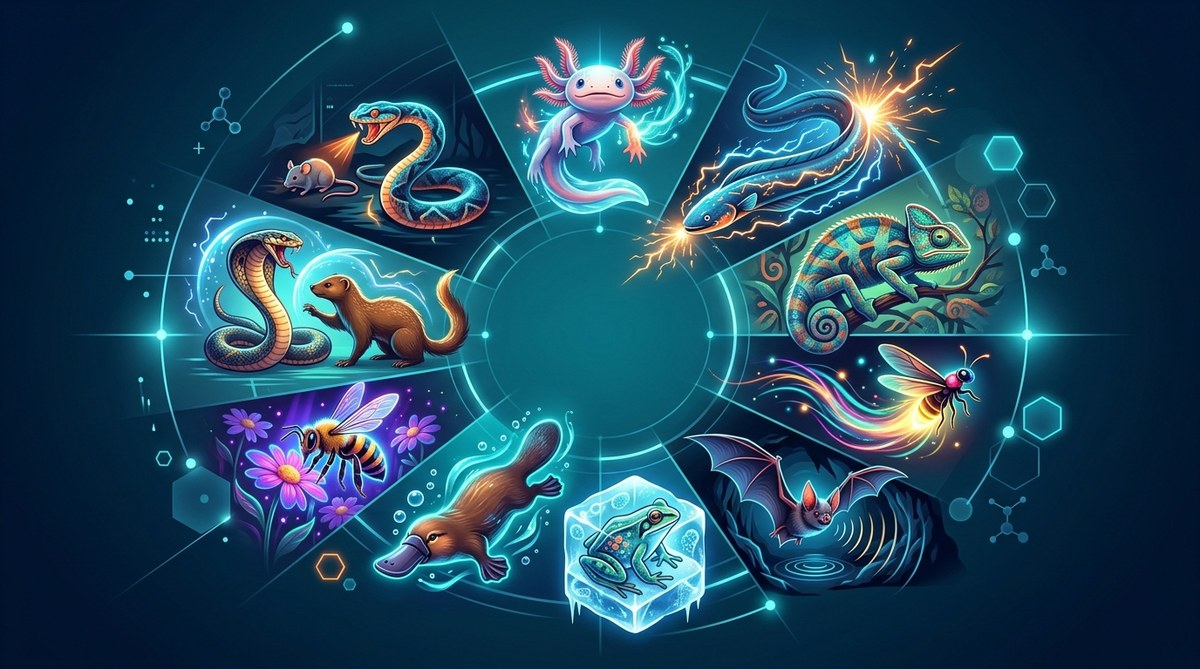
Nature has produced some creatures that seem to have stepped straight out of a comic book. We are not talking about flying or shooting lasers from their eyes. The abilities we are covering are real, scientifically documented, and often more bizarre than fiction. Some animals can survive being frozen solid. Others can see colors that do not exist for humans. A few can even regrow body parts like it is no big deal. These are not party tricks. These are survival tools honed over millions of years. And once you learn about them, you will start looking at the animals around you very differently.
The animal kingdom is packed with superpowers that beat anything in fiction. From the tardigrade's near indestructibility to the mantis shrimp's rainbow vision, these abilities evolved for one reason: survival. Understanding them gives us a new respect for nature and even inspires human technology. You do not need a cape to be a superhero.
The Immortal Creature That Laughs at Death
There is a creature so small you need a microscope to see it. Yet it can survive the vacuum of space, boiling water, and extreme radiation. We are talking about the tardigrade, also known as the water bear. This tiny animal enters a state called cryptobiosis. It dries out completely, curls up into a ball, and basically pauses its own metabolism. In this state, it can survive for decades without food or water. When conditions improve, it rehydrates and walks away like nothing happened. Scientists have even reanimated tardigrades that were frozen for over 30 years. That is not just tough. That is borderline immortal.
The Shrimp That Sees a World We Cannot Imagine
Human eyes have three types of color receptors. We see a spectrum of about one million colors. The mantis shrimp has between 12 and 16 types of photoreceptors. That means it sees a world of color that is completely inaccessible to our brains. It can detect ultraviolet light, infrared light, and polarized light. Some scientists believe the mantis shrimp can see colors that do not even have names. But this animal is not just about vision. It also has a pair of club like appendages that can strike with the force of a .22 caliber bullet. It punches its prey so fast that the water around it boils. That is a combination of sensory and physical power that is almost unmatched in nature. For more on how creatures perceive their environment, check out these facts about the brain.
The Frog That Freezes and Thaws Like an Ice Cube
The wood frog lives in some of the coldest parts of North America, including Alaska and Canada. When winter hits, this frog does not migrate or burrow deep into the mud. It allows itself to freeze. Up to 65 percent of its body water turns to ice. Its heart stops beating. Its lungs stop working. It is, for all practical purposes, dead. Then spring arrives, and the frog thaws out. Within hours, its heart starts beating again, and it hops away. The wood frog produces a natural antifreeze made of glucose and urea. This prevents ice crystals from destroying its cells. It is one of the most extreme examples of biological adaptation on the planet.
The Animal That Can Regrow Its Entire Brain
If you cut a planarian flatworm into pieces, each piece can grow into a new worm. That is impressive enough. But here is the real shocker. If you remove the head of a planarian, it will regrow a new one. And the new head contains a fully functional brain. Scientists have even trained planarians to navigate a simple maze. Then they ground up the trained worms and fed them to untrained worms. The untrained worms somehow inherited the memory of the maze. This suggests that memories might be stored chemically, not just in the brain structure. It is a phenomenon that still puzzles biologists today.
The Beetle That Fires a Boiling Chemical Spray
The bombardier beetle has one of the most defensive weapon systems in nature. When threatened, it mixes two chemicals inside its body: hydroquinone and hydrogen peroxide. The reaction produces a boiling hot spray that reaches temperatures of 212 degrees Fahrenheit. The beetle can aim this spray with remarkable accuracy, shooting it directly at predators like ants, spiders, and even frogs. The spray comes out in pulses, allowing the beetle to fire multiple shots. It is like having a built-in chemical cannon. This defense mechanism is so effective that few predators even bother trying to eat a bombardier beetle.
The Fish That Can Change Its Sex (and Back Again)
The clownfish, made famous by a certain animated movie, has a superpower that many people do not know about. All clownfish are born male. When the dominant female in a group dies, the largest male undergoes a sex change and becomes the new female. This process is called sequential hermaphroditism. But clownfish are not the only ones. The kobudai fish can change from female to male. Some species of wrasse can change back and forth multiple times. This ability ensures that a breeding pair always exists, even if one member dies. It is a practical solution to the challenges of living in small, isolated groups.
The Jellyfish That Cheats Death
Turritopsis dohrnii is commonly called the immortal jellyfish. It is a tiny creature, smaller than your pinky nail. When it is injured, stressed, or old, it does something extraordinary. It reverts to its juvenile polyp stage. It essentially reverses its life cycle. The jellyfish starts growing again from scratch, becoming young once more. In theory, this cycle can repeat indefinitely. That means the immortal jellyfish could live forever unless it is eaten by a predator. Scientists are studying this creature closely, hoping to unlock secrets about cellular regeneration that could apply to human medicine. For more on how animals defy expectations, read these facts about animals.
The Lizard That Squirts Blood From Its Eyes
The horned lizard has a defense mechanism that sounds like something from a horror movie. When threatened by a predator like a coyote or a hawk, it increases blood pressure in its head until tiny blood vessels around its eyes burst. It then squirts a stream of blood up to five feet away. The blood contains a chemical that tastes terrible to canines and felines. The predator usually recoils, giving the lizard time to escape. This is not a voluntary action in the way we think of it. The lizard has no control over when the vessels burst. It is an automatic response triggered by extreme stress.
The Bird That Can Fly for Ten Months Without Landing
The common swift is a small bird that looks unremarkable. But its lifestyle is anything but ordinary. Studies using tracking devices have shown that common swifts can stay airborne for up to ten months straight. They eat, sleep, mate, and even gather nesting materials while flying. They land only to breed. How do they sleep? Scientists believe they sleep in short bursts using only one half of their brain at a time. This is called unihemispheric slow wave sleep, and it is also seen in some dolphins and whales. The common swift holds the record for the longest uninterrupted flight of any bird.
The Octopus That Can Edit Its Own Brain
The octopus is already famous for its intelligence, its ability to change color, and its three hearts. But it has a superpower that is truly unique in the animal kingdom. Octopuses can edit their own RNA. This means they can change the instructions their cells use to build proteins, without changing their DNA. This ability allows them to adapt to new environments much faster than evolution would normally allow. It is a form of biological hacking. Scientists are still trying to understand how this works and what it means for our understanding of genetics. It is one of the reasons the octopus is considered the closest thing to an alien intelligence on Earth.
How These Superpowers Compare to Human Abilities
It is fun to compare these animal abilities to our own. Humans are not the strongest, fastest, or most resilient creatures. But we have our own superpower: our brains. We can plan for the future, create complex tools, and pass knowledge down through generations. That said, it is humbling to see what other species can do. Here is a simple comparison table to put things in perspective.
| Animal | Superpower | Human Equivalent |
|---|---|---|
| Tardigrade | Survives extreme conditions | Would die in seconds |
| Mantis Shrimp | Sees 16 color channels | Sees only 3 |
| Wood Frog | Freezes solid and lives | Dies from hypothermia |
| Planarian | Regrows whole brain | Cannot regrow a single neuron |
| Bombardier Beetle | Fires boiling chemical | Requires a flamethrower |
| Common Swift | Flies 10 months nonstop | Needs a plane |
| Octopus | Edits its own RNA | Cannot edit our own genes |
The Science Behind Why These Abilities Evolved
Every superpower on this list exists for one reason: survival. The tardigrade developed its toughness to survive in harsh microenvironments. The mantis shrimp evolved its vision to spot prey and predators in the complex coral reef. The wood frog needed to survive winters that would kill most animals. Evolution does not create abilities for fun. It creates them because they give the animal a better chance to live long enough to reproduce. That is the only goal. Understanding this helps us appreciate the incredible diversity of life on Earth. It also shows us that there are many ways to solve the same problem. Nature is the ultimate innovator.
A Step by Step Guide to Observing Animal Superpowers Yourself
You do not need a lab to witness some of these abilities. You can see them in your own backyard or local park. Here is how to start looking.
- Visit a pond or creek in early spring. Look for wood frogs. If you live in a cold region, you might spot one emerging from the ice.
- Go tide pooling at the beach. Look for small crabs, sea stars, and anemones. Sea stars can regrow lost arms.
- Watch birds in your area during migration season. You might spot a swift or a swallow. Think about how far they have flown.
- Look under logs in a damp forest. You might find a salamander. Many salamanders can regrow their tails and even parts of their limbs.
- Observe your own pets. Cats have incredible balance and night vision. Dogs can smell things from miles away.
You do not need special equipment. Just patience and curiosity. The more you look, the more you will see.
Common Misconceptions About Animal Superpowers
There are a few myths that keep popping up. Let us clear them up.
- Myth: All jellyfish are immortal. Only Turritopsis dohrnii has this ability. Most jellyfish have normal life cycles.
- Myth: The mantis shrimp can see colors we cannot imagine. This is true, but it does not mean it sees "more" colors. It sees a different range of colors.
- Myth: Tardigrades are indestructible. They are extremely tough, but they can be killed by high impact forces or prolonged exposure to extreme heat.
- Myth: Planarians remember everything. They can retain simple learned behaviors, but they do not have complex memories like humans.
- Myth: The wood frog survives because of antifreeze. It does produce glucose, but the process is more complex. The glucose protects cells, but the frog still undergoes a near death state.
Why These Abilities Matter for Technology
Humans have been copying animal abilities for centuries. This is called biomimicry. The shape of bullet trains was inspired by the kingfisher's beak. Velcro was inspired by burrs that stuck to a dog's fur. Now scientists are looking at animal superpowers for new ideas. The bombardier beetle's chemical spray could inspire new fire extinguishers. The mantis shrimp's vision could lead to better cameras and sensors. The wood frog's freezing ability could help preserve human organs for transplant. The immortal jellyfish could teach us about cellular aging. We are only scratching the surface.
The Limits of Animal Superpowers
Every superpower has a downside. The tardigrade's toughness comes at a cost. It is tiny and slow. The mantis shrimp's incredible vision requires a massive amount of brain power to process. The wood frog spends months in a state that looks like death. The bombardier beetle must carry around dangerous chemicals inside its own body. The common swift never truly rests. The octopus's RNA editing ability is energy intensive. Nature always balances power with cost. There is no free lunch in evolution.
What We Can Learn From These Creatures
These animals teach us that strength comes in many forms. You do not need to be the biggest or the fastest. You need to be adapted to your environment. The wood frog survives the winter not by fighting it, but by embracing it. The tardigrade survives extremes by shutting down. The mantis shrimp sees the world in a way we cannot. Each creature has found its own path. That is a lesson worth remembering. We can apply this thinking to our own lives. Instead of trying to be good at everything, we can focus on what makes us unique.
Appreciating the Hidden World Around Us
The next time you step outside, remember that you are surrounded by creatures with abilities that seem impossible. That spider in the corner of your room is a master of silk engineering. The bird on your windowsill might have flown thousands of miles. The ant on the sidewalk can carry fifty times its own weight. These are not just animals. They are living proof that reality is stranger than fiction. Take a moment to appreciate them. They have been perfecting their superpowers for millions of years. And they are still here, doing what they do best: surviving.
Was this page helpful?
Our commitment to delivering trustworthy and engaging content is at the heart of what we do. Each fact on our site is contributed by real users like you, bringing a wealth of diverse insights and information. To ensure the highest standards of accuracy and reliability, our dedicated editors meticulously review each submission. This process guarantees that the facts we share are not only fascinating but also credible. Trust in our commitment to quality and authenticity as you explore and learn with us.