```markdown
Desert rain is a rare event. When it does arrive, it often comes as a sudden downpour that drenches the ground for only a few minutes. Yet cacti stand ready. They do not wander. They do not chase storms. So how do cactus roots find water in the desert when the surface looks bone dry most of the year?
Key Takeaway
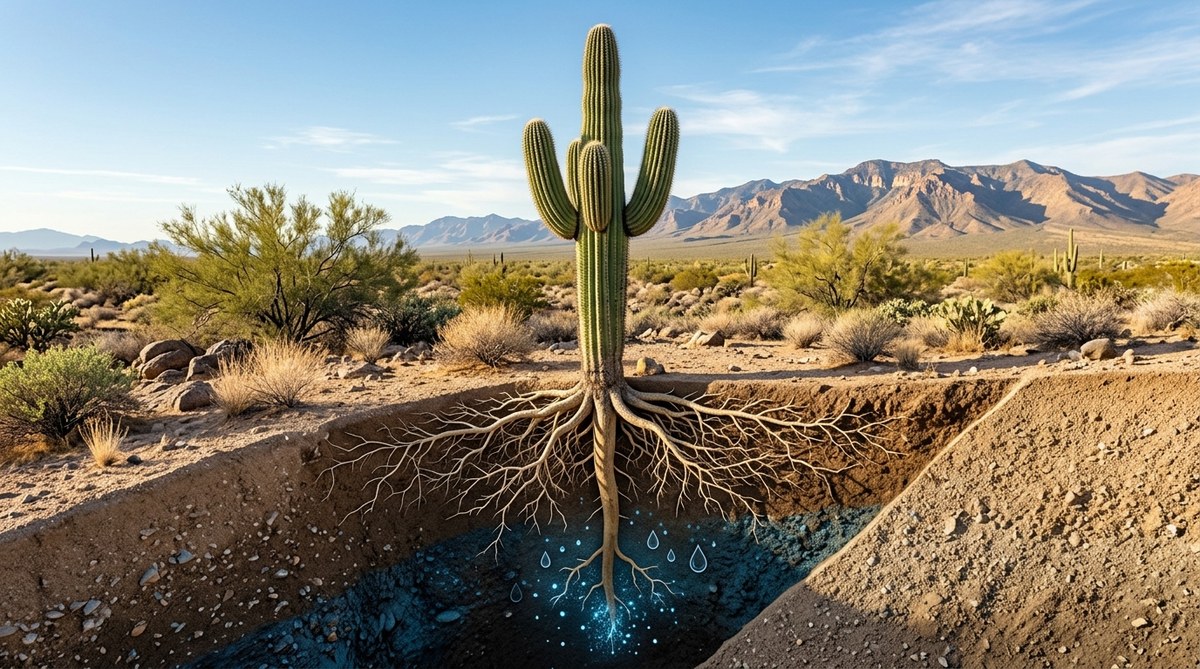
Cactus roots do not search for water the way animals do. Instead, they use a two-part survival system: a wide, shallow network that captures surface moisture fast, and deep taproots that reach underground reserves. The real trick is timing. Cacti grow new roots within hours of rain, then shed them during drought. This saves energy and keeps the plant alive in harsh desert conditions.
## The Hidden World Below the Sand
A cactus looks like a desert survivor above ground. But the real action happens below. The roots do the heavy lifting. They are not like the roots of a maple or an oak. They are specialized tools built for one job: grabbing water before it vanishes.
Most people picture roots reaching deep into the earth, like an inverted tree. That is true for many plants. Cacti are different. Their roots stay surprisingly shallow, often within the top few inches of soil. That is the first secret. Desert rains are rare, and when they come, they are often light and short. The water does not sink deep. It wets the surface soil. Cactus roots spread wide and flat to catch that moisture before it evaporates.
This strategy works because desert soils dry fast. The top layer may stay damp for only a few hours after a storm. A cactus must act fast. Its roots are built for that exact moment.
Key Takeaway
Cactus roots find water through a combination of shallow, wide-spreading systems, rapid response to rainfall, and specialized structures like lateral roots and root hairs. They avoid deep soil and instead capture surface moisture before it evaporates. Some species even grow new roots within hours of rain, maximizing every drop in harsh desert conditions.
A cactus looks like a plant built for defense, not for hunting water. But beneath the sand lies one of the most efficient root systems in nature. It does not dig deep like a tree. It spreads wide, waits patiently, and reacts to moisture in a matter of hours. This is the surprising strategy behind how cactus roots find water in the desert, and it is far more clever than most people realize.
## What Makes Cactus Roots Different From Other Plants
Most plants send roots down into the soil to chase groundwater. Cactus roots do the opposite. They stay shallow, often within the top few inches of soil. That seems odd at first. But desert rain is rare and light. It rarely soaks deep into the ground. By staying near the surface, cactus roots catch water the moment it touches the soil.
The root system of a cactus is wide, not deep. A mature saguaro may have roots spreading up to 50 feet from its trunk, yet those roots sit only 4 to 6 inches below the surface. This shallow network lets the plant capture rainfall before it evaporates or sinks away.
## What Makes Cactus Roots So Good at Finding Water
Cactus roots are built for efficiency. They do not dig deep. They spread wide. That is the core trick.
Most desert rain events are light. They wet only the top few inches of soil. A deep root system would miss that water entirely. So cacti evolved a sprawling, shallow web of roots that sits near the surface, ready to drink the moment moisture arrives.
The root system has two main parts:
- **Main roots.** These anchor the plant and reach a bit deeper, sometimes 15 to 25 feet, to tap into deeper soil moisture.
- **Rain roots.** These are thin, fibrous roots that spread outward just below the surface. They can grow rapidly after rain and then die back during dry spells.
This two part system is the key. It lets the cactus respond to rain fast, while still keeping a stable anchor below.
## Why Cactus Roots Spread Wide Instead of Deep
Most plants send roots down. Cacti do the opposite. They send roots out. A mature saguaro may have a root system that spreads as far as 30 to 50 feet from the trunk, but only sits a few inches below the soil surface.
That sounds odd. But it makes perfect sense in a desert.
Rain in the desert is rare and unpredictable. When it does fall, it often comes as a short downpour. The water does not sink deep into the soil. It wets the upper layers and evaporates fast. Cactus roots spread wide and stay shallow to catch that moisture before it disappears.
This is the core answer to how do cactus roots find water. They do not dig deep. They spread out and wait.
## The Two Root Systems of a Cactus
Cacti use two distinct root setups depending on their life stage and species.
### Young Cacti Use Taproots
A young cactus often grows a taproot. This is a single thick root that goes straight down. It can reach depths of several feet in the first few years. The taproot anchors the plant and reaches deeper soil moisture that sits below the hot, dry surface. This helps seedlings survive their first brutal summers.
As the cactus matures, the taproot becomes less important. Many species replace it with a wide, shallow network.
### Adult Cacti Use Fibrous Surface Roots
Once established, most cacti rely on fibrous roots that spread out horizontally. These roots stay close to the surface, usually within the top 10 to 20 centimeters of soil. That might seem odd for a desert plant. But it makes perfect sense when you think about how deserts deliver water.
Desert rain is rare. When it comes, it is often light and brief. The water does not soak deep into the ground. It wets only the top few inches of soil. A cactus with deep roots would miss most of that moisture. Instead, its shallow, wide-spreading root system captures the water right where it lands.
## The Root System Is Built Like a Net
Cactus roots do not dig deep like a carrot. They spread wide and close to the surface. In many species, the roots extend far beyond the width of the plant itself. A large saguaro may have roots that reach up to 50 feet from its base, yet only sit a few inches below the soil.
This wide, shallow network is the main answer to how do cactus roots find water. They do not chase water like a mole hunting worms. They blanket the ground. When rain falls, the entire network is ready to catch it before it evaporates or runs off.
### The Two Root Types
Most cacti grow two kinds of roots.
- **Main structural roots.** These anchor the plant and reach a few feet down for stability.
- **Feeder roots.** These spread wide and stay shallow. They are the water collectors.
The feeder roots are the real heroes. They sit just below the soil surface, often within the top 10 to 20 centimeters. That lets them grab moisture from light desert rains before the sun dries the ground.
## How Cactus Roots Detect Water
Cactus roots do not have eyes or a brain. They still manage to find water. How? They use chemical and physical cues.
Desert rain is rare. When it arrives, it is often light and short. Cactus roots respond to moisture gradients in the soil. This is called hydrotropism. Roots grow toward areas with higher moisture. They sense water through changes in soil humidity and chemical signals from the wet ground.
The root system is built for speed, not depth. Many people imagine cactus roots plunging deep into the earth. That is mostly wrong. Most cactus roots spread wide, just below the surface. A mature saguaro, for example, may have roots extending up to 30 feet from its base. The entire network sits only a few inches deep. This lets the plant grab water from light rains before it evaporates or sinks deeper.
## The Real Strategy: Wide and Shallow
The classic image of a deep taproot does not match most desert cacti. Instead, cacti use a broad, shallow root system. These roots stay close to the surface, usually within the top 10 to 20 centimeters of soil. That zone catches rainfall first. When a storm passes, water soaks in only a short distance before the desert sun starts pulling it back out. A shallow network beats a deep taproot in this race.
Some cacti, like the saguaro, do grow a deeper taproot. But that taproot is for stability, not water. The real water collection happens in the wide, shallow web of feeder roots that spread far from the plant.
## How Do Cactus Roots Find Water in the Desert
Cactus roots find water through a combination of shallow spread, fast response to rain, and specialized structures that guide moisture toward the plant. They do not dig deep wells. Instead, they blanket the top layers of soil where desert rains actually soak in.
A saguaro root system reaches out about twice the width of the plant's height. Most of those roots sit just a few inches below the surface. That sounds odd until you realize how deserts deliver water. Rain in arid regions often comes as short, intense bursts. The water does not sink deep. It wets the upper soil layer. Cactus roots are built to capture that shallow moisture before it evaporates.
## The Root System Is a Wide Net, Not a Deep Well
Many people picture roots reaching far underground. Cacti flip that idea. They spread wide, not deep. A mature saguaro may have roots extending 50 feet from its base, yet most of them sit only 2 to 4 inches below the surface. This wide, shallow network lets the plant grab water the moment rain touches the ground.
The main taproot stays short and thick. It anchors the cactus and stores a little water. But the real action happens in the lateral roots. These spread out like a hidden web just under the soil surface. They are designed to capture surface moisture before it evaporates or runs off.
Some species also send out smaller roots that grow horizontally for long distances. A single plant can cover a huge area this way. That is the first secret: cacti do not dig deep for water. They spread wide instead.
## Why Cactus Roots Spread Wide Instead of Digging Deep
Desert rain is rare and light. When it falls, it wets only the top few inches of soil. Deep roots would miss that moisture entirely. Cactus roots stay shallow, often within the top 10 to 15 centimeters of soil. This lets them grab water the moment it touches the ground.
The root system of a cactus is broad and fibrous. It spreads out in a wide circle around the plant. Think of it like a shallow umbrella under the soil. The goal is to catch as much surface water as possible before it evaporates.
Some cacti, like the saguaro, also send out a few deeper roots. These help anchor the plant. But the real water collection happens near the surface. This is why a heavy rain can refill a cactus even when the ground dries out days later.
## The Surprising Way Cactus Roots Hunt for Water
Most people picture roots digging deep into the soil, searching for an underground river. Cactus roots do not work that way. They spread wide, not deep. A mature saguaro may have roots that extend outward up to 50 feet from its trunk, yet only sit a few inches below the surface.
This shallow network is a deliberate survival strategy. In the desert, rain is rare and brief. When it falls, it wets only the top few inches of soil. A cactus needs to grab that moisture before it evaporates or runs off. Wide, shallow roots do exactly that.
The root system acts like a wide net. It captures water across a large area. This matters because desert rain is patchy. One storm may soak one spot and skip another entirely. A broad root network raises the odds of catching some of that scattered rainfall.
## The Anatomy of Cactus Roots
Cactus roots are not like the roots of a maple or an oak. They do not dig deep looking for groundwater. Most cactus roots stay within the top 10 to 15 centimeters of soil. That might sound odd, but it is a deliberate survival choice.
Desert rain rarely penetrates deep into the ground. Much of it evaporates or runs off. By keeping roots near the surface, cacti grab moisture the moment it touches the soil.
The root system is wide, not deep. A mature saguaro may have roots spreading out as far as 15 meters from its trunk. Yet those roots sit only a few inches below the surface. That wide, shallow network lets the plant soak up water across a large area before the sun can reclaim it.
Some cacti also grow special roots that appear only after rain. These are called rain roots. They sprout within hours of a storm, absorb water fast, then die back when the soil dries. This is a clever survival trick. The plant does not waste energy keeping these roots alive year round.
## The Real Strategy: Roots That Chase Water
Cactus roots do not dig deep like most plants. They spread wide and stay shallow. In the Sonoran Desert, a mature saguaro may have roots that reach 30 feet from the stem, yet sit only a few inches below the surface. That wide, shallow network is the main answer to how do cactus roots find water. They cover more ground, not more depth.
Rain in the desert is rare and uneven. A single storm may wet only a small patch of soil. A wide root system lets the cactus catch water wherever it falls, even if that spot is far from the main stem.
Some cacti also grow roots that move toward water. This is called hydrotropism. When a wet patch appears, new roots sprout and grow toward it. It sounds like magic, but it is simple biology.
## What Makes Cactus Roots Different From Regular Roots
Most plants rely on deep, branching roots that spread through rich soil. Cacti do the opposite. They grow shallow, wide-reaching roots that stay close to the surface. In the Sonoran Desert, for example, a mature saguaro may send roots out more than 30 feet from its trunk. Yet those roots often sit just a few inches below the soil.
This shallow system is a survival trick. Desert rains are rare and brief. When rain does fall, it wets only the top few inches of soil. Cactus roots are positioned to grab that water before it evaporates or sinks deeper. They do not need to dig deep because the water is not deep. It is a simple match between root shape and rainfall patterns.
### The Two Root Systems
Most cacti use two distinct root setups:
- **Broad shallow roots.** These spread wide, sometimes 10 to 15 feet from the plant. They sit close to the surface, often just 2 to 5 inches down. They catch light rains and morning dew.
- **Deep taproots.** Some larger cacti, like the saguaro, grow a single long root straight down. This root reaches deep moisture stores and stabilizes the plant in storms.
Each system handles a different job. Shallow roots grab surface water fast. Taproots reach deeper reserves when surface water is gone.
## How Cactus Roots Detect Water
Cactus roots do not have eyes or a brain. They still manage to find water with impressive accuracy. The secret is a mix of root growth patterns, chemical signals, and timing.
Roots grow toward moisture through a process called hydrotropism. Tiny cells at the root tip sense changes in soil moisture and steer growth toward wetter zones. The cactus does not "think" about this. It is a built in response that happens at the cellular level.
But there is more going on than simple root growth. Cactus roots are also designed to react fast. When rain hits the desert soil, the roots of many cactus species wake up within hours. They grow new feeder roots almost overnight. These thin, white roots are the real water collectors. They spread out horizontally, just below the soil surface, and stay dormant until the next rain.
## The Surprising Way Cactus Roots Work
Most people picture cactus roots as deep, carrot-like structures reaching far underground. That image is wrong for most cacti. The saguaro and many other desert cacti keep their roots surprisingly shallow. Instead of diving deep, they spread wide.
A mature saguaro may stand 40 feet tall, yet its roots sit only a few inches below the surface. They extend in a broad circle around the plant, often spanning a diameter that matches or exceeds the cactus height. This lets the plant capture surface moisture from a large area before it evaporates.
The root system does more than drink. It also anchors the cactus in loose desert soil. That wide, shallow web holds the plant steady during windstorms and flash floods.
## The Two Root Types That Make Desert Survival Possible
Cacti do not use one root system. They use two distinct types, each with a different job.
**Shallow fibrous roots.** These spread out just below the soil surface, often within the top few inches. They cover a wide area around the plant. A mature saguaro can send roots out nearly as far as it is tall, sometimes 50 feet or more. This wide network captures rainfall before it evaporates or runs off.
**Deep taproots.** Some cactus species grow a long central root that plunges downward. It reaches moisture stored deep underground. The saguaro and the prickly pear both use this combo approach: shallow feeders for rain, deep taproots for stability and stored water.
This two tier system is the real answer to how do cactus roots find water. They do not dig toward a single hidden pool. Instead, they blanket the soil and wait.
## The Root System Is Not What You Expect
Most people picture cactus roots as deep, carrot like structures plunging toward underground lakes. The reality is different. Most cactus roots stay close to the surface.
A mature saguaro can stand 40 feet tall, yet its roots may spread only a few inches deep. They reach outward instead of downward. The root system can extend up to 50 feet from the plant in all directions. This wide, shallow network lets the cactus capture rainfall across a huge area before the water evaporates or runs off.
Desert rain is rare and brief. When it arrives, it often comes as a sudden downpour. The ground cannot absorb it all at once. A wide, shallow root system acts like a sponge spread over a large surface. It grabs water while it is still near the top of the soil.
This is one of the most important facts about cactus survival. The roots do not dig deep to find hidden underground lakes. They spread out to catch what little rain falls.
## How Cactus Roots Are Built for Dry Ground
Cactus roots look simple, but they are highly specialized. Most species grow a shallow, spreading root system that stays within the top few inches of soil. In some species, the roots extend outward as far as the cactus is tall, sometimes much farther. A mature saguaro, for example, can have roots that spread 30 to 50 feet from its base while remaining only a few inches deep.
This design matches the desert reality. Rain in arid regions often comes as short bursts. The soil may only get wet in the top layer. A shallow, wide root system lets the cactus grab moisture before it evaporates or sinks deeper.
Some cacti also grow roots that sit very close to the surface. These are called rain roots. They appear after rainfall and can absorb water within hours. When the soil dries, those fine roots die back and the cactus waits for the next storm.
## The Secret Is Not Deep Roots
Most people picture cactus roots as long taproots reaching deep underground. That image is mostly wrong. Most cacti have shallow, wide spreading root systems. They sit just a few inches below the surface and extend far beyond the plant's width.
A saguaro cactus, for example, may have roots that spread out as far as 50 feet from its trunk. Yet those roots stay only a few inches deep. This design lets the cactus capture surface moisture before it evaporates or sinks away.
Desert rains are rare and light. When they do come, the water often only wets the top few inches of soil. A deep taproot would miss that moisture. A wide, shallow network catches it fast.
## What Makes Cactus Roots Different From Other Plants
Most plants send roots deep into the soil. They chase groundwater and stable moisture. Cactus roots do the opposite in many ways. They spread wide and stay shallow. That seems odd until you think about desert rain.
In the Sonoran Desert or the Chihuahuan Desert, rain events are short. The soil may be dry for months. When rain finally arrives, it soaks only the top few inches of ground. A cactus must grab that water before it evaporates or sinks out of reach.
The root system is built for this race against time.
### The Sprawling Network
Cactus roots grow outward, not downward. A mature saguaro can have roots that spread as far as the plant is tall, sometimes 50 feet or more. These roots stay close to the surface, usually in the top 3 to 5 inches of soil. That lets them catch rainfall before it drains deep.
This shallow design is a deliberate survival strategy. Desert rains are often light and short. The soil may only get wet near the surface. A cactus that sends roots deep would miss that moisture. So it spreads wide instead. Some species can extend roots up to 15 feet from the plant, forming a hidden web that waits for the next storm.
## The Root System Is Not What You Expect
Many people picture cactus roots as long taproots reaching deep underground. That is mostly wrong. Most cacti have shallow, wide-spreading root systems. They stay close to the surface, usually within the top 10 to 20 centimeters of soil. This lets them catch rainfall before it evaporates or sinks away.
Some cacti do grow a small taproot. That root anchors the plant and reaches a bit deeper for stored moisture. But the real action happens in the shallow zone. In the Sonoran Desert, a mature saguaro can send roots out more than 15 meters from its base. Those roots sit just below the surface, ready to drink the moment rain touches the ground.
This is a key part of how cactus roots find water. They do not dig deep like a carrot. They spread wide and stay shallow. That strategy works because desert rains are rare and light. The soil only gets wet near the surface. A wide, shallow network catches that moisture before it evaporates or sinks away.
## What Makes Cactus Roots So Different
Most plants rely on deep roots to reach groundwater. Cacti flip that idea. Their roots stay surprisingly close to the surface. Many species spread roots within the top 10 to 15 centimeters of soil. Some extend outward for several meters, sometimes farther than the plant is tall.
This design matches the desert environment. Rain events are short. The soil dries fast. By keeping roots near the surface, a cactus can grab water the moment it hits the ground. The wide spread acts like a net. It collects moisture from a large area around the plant.
The saguaro cactus, for example, can have roots that extend up to 30 feet from the stem. Yet those roots sit only a few inches deep. That wide, shallow system is the main trick. It lets the cactus capture water across a big footprint before the sun evaporates it.
## The Anatomy of Cactus Roots
Cactus roots are not like tree roots. Most trees grow deep taproots that chase groundwater. Cacti do the opposite. They spread out near the surface, sometimes just two inches deep. This lets them grab rainfall the moment it hits the soil.
The root system has two main parts:
- **Main structural roots.** These anchor the plant and spread wide, sometimes up to 15 feet from the base.
- **Fine feeder roots.** These thin, branching roots do the actual water absorption. They appear after rain and can grow within hours.
Some cacti also grow special "rain roots." These are temporary roots that sprout quickly when moisture arrives. They die back when the soil dries. This is a fast response system, not a permanent network.
---
## What Makes Cactus Roots Different From Regular Plant Roots
Most plants rely on deep roots that reach a steady water table. Cacti do not. Desert rain is rare and shallow. It wets only the top few inches of soil. So cactus roots spread wide and stay shallow.
A saguaro's root system may extend up to 30 feet from the stem, but the roots sit only a few inches below the surface. That wide, shallow web lets the cactus catch water across a large area. When rain hits the desert floor, the roots are ready to grab it before it evaporates or sinks deeper.
### The Root Network Design
Cactus roots are not like tree roots. They do not dig deep to find a hidden underground river. Instead, they build a broad, dense network near the surface. This network can stretch far beyond the width of the cactus itself. Some species send roots out in a radius that is several times the plant's height.
The main functions of this network are:
- Capturing rainfall before it drains away
- Absorbing dew and fog from the soil surface
- Anchoring the plant during storms and high winds
- Storing water in specialized tissues once absorbed
These roots are thin and fibrous. They spread wide rather than deep. This design matches the desert reality: most rain events wet only the top few inches of soil.
## How Cactus Roots Are Different From Regular Roots
Most plants rely on deep roots to reach groundwater. Cactus roots do the opposite. They stay shallow and spread wide. A mature saguaro may have roots that reach out 30 feet or more from its trunk, yet sit only a few inches below the surface.
This wide, shallow network lets the cactus catch water before it evaporates or sinks too deep. Desert rains are short and light. The soil surface may be wet for only minutes. A cactus must act fast.
The root system is also built to survive. Some roots die back during drought. They regrow when rain returns. This saves energy and keeps the plant alive during long dry spells.
## The Two Root Types Cacti Rely On
Cacti do not use one type of root. They use a combination. Each type has a specific job.
**Shallow fibrous roots.** These spread out wide, often just a few inches below the soil surface. They cover a large area around the plant. This lets the cactus grab rainfall before it evaporates or runs off.
**Deep taproots.** Some cactus species grow a single long root straight down. This root reaches deeper moisture that surface roots cannot access. Not all cacti have them, but many larger species do.
The two systems work together. The shallow roots handle light rains. The taproot handles rare, heavier storms. Together, they give the cactus two ways to collect water.
## The Rain Response: How Cactus Roots Act Fast
Desert rain is rare. When it comes, it is often short and intense. Cactus roots have to act fast.
Most cactus roots sit close to the surface. They spread wide, often in a radius that matches the width of the plant. Some species send roots out two or three times the diameter of the stem. This wide, shallow network lets them capture surface moisture before it evaporates.
When rain hits the desert, the top layer of soil gets wet. Cactus roots respond within hours. Fine rootlets appear, called root hairs. These tiny fibers increase the surface area that touches the soil. More surface area means more water absorbed in less time.
Some cacti also use a special trick called "rain roots." These are thin, temporary roots that sprout quickly after a rainfall. They are not the thick, woody roots you might picture. Rain roots are delicate and short lived. Their job is simple: drink as much as possible before the desert heat returns.
This is a key difference between cacti and many other plants. Most plants send roots deep into the soil. Cacti do something else. They spread wide and shallow. This lets them capture surface moisture from even light rains, which never soak deep into desert soil.
## Why Cactus Roots Are Shallow, Not Deep
A common myth says cactus roots go deep to find underground water. In most cases, that is wrong. Most cactus species keep their roots surprisingly close to the surface. Think of them as a wide, sprawling net rather than a deep taproot.
The reason is simple. In the desert, rain is rare and light. When it falls, the water wets only the top few inches of soil. A cactus with deep roots would miss most of that moisture. Instead, many cacti grow shallow, wide root systems that spread far from the plant.
The saguaro cactus, for example, has roots that extend outward about as far as the plant is tall. Some studies show roots radiating up to 15 feet from the stem. These roots sit just a few inches below the surface. That lets them grab rainfall the moment it touches the ground.
This shallow network is a survival strategy. The desert soil dries fast at the surface, but the top layer also catches the most rain. Cacti position their roots where the water actually lands.
## How Cactus Roots Detect Water
Cactus roots do not "hunt" for water like a thirsty animal. They use a smarter trick. They grow toward moisture using chemical and physical cues in the soil.
Roots sense water through a process called hydrotropism. Tiny cells at the root tip respond to differences in moisture. They bend and grow toward wetter soil. This is not a conscious choice. It is a built-in response, like how a sunflower turns toward the sun.
The root cap, the very tip of a root, acts as the sensor. It detects moisture gradients in the soil. When one side of the root senses more water, cells on that side grow slower. Cells on the dry side grow faster. This imbalance bends the root toward the water source.
That is the basic answer to how do cactus roots find water. But the full story is more interesting. Cacti use a mix of shallow spread, rain-triggered growth, and chemical sensing to survive places where water can vanish for months.
## Why Cactus Roots Stay Shallow
Most people picture roots plunging deep into the earth. Cactus roots do the opposite. They spread wide, not deep. Many species keep 90% of their roots within the top 10 to 15 centimeters of soil.
This makes sense when you think about desert rain. Most desert storms deliver light showers that only wet the surface. A deep root would never reach that water before it evaporated. A shallow, wide network catches the moisture while it is still within reach.
Some cacti, like the saguaro, do send a few deep roots downward. But the real action happens in the topsoil. The bulk of the root system sits close to the surface, often extending far beyond the plant's shadow. That wide footprint helps the cactus capture water from a huge area.
## The Root System Is Built for Rain, Not for Steady Moisture
Desert rain is rare. When it comes, it is often brief and intense. Cactus roots are built to take advantage of these short windows. They do not wait patiently like a thirsty garden plant. They respond fast.
Most cactus roots fall into two categories:
- **Fibrous surface roots.** These spread wide and shallow, often within the top few inches of soil. They catch rainfall before it evaporates or runs off.
- **Deep taproots.** Some species grow a single long root straight down. This reaches moisture stored far below the surface.
These two systems work together. The shallow roots grab surface moisture. The deep roots tap underground reserves. That combination gives cacti a big advantage in places where rain is rare.
## What Makes Cactus Roots Different From Regular Roots
Regular garden plants send roots down to find a steady supply of soil moisture. Cactus roots do something else. They are built for a feast or famine world.
Most cacti keep their roots close to the surface. In fact, many species spread roots just a few inches below the soil. This lets them capture rainfall before it evaporates or sinks deep into the ground.
The root system is wide, not deep. A mature saguaro may have roots that stretch 50 feet from the trunk, yet they sit only a few inches underground. That wide network acts like a shallow net. When rain arrives, the roots drink fast.
Some cacti also grow temporary roots. These are called rain roots. They appear within hours after a rain event. They are thin, white, and highly absorbent. When the soil dries, they shrivel and drop away. This saves the plant energy.
## How Do Cactus Roots Find Water: The Real Strategy
The question "how do cactus roots find water" has a surprising answer. They do not dig deep like most plants. They spread wide and stay shallow.
Most people picture roots plunging deep into the earth. Cacti flip that idea. In many deserts, rain is rare and falls in small amounts. The top few inches of soil get wet first. A shallow, spreading root system is the best way to capture that moisture before it evaporates.
A mature saguaro cactus, for example, can have roots that stretch up to 50 feet from the plant. Yet those roots sit only a few inches below the surface. This wide, shallow web lets the cactus grab water from a huge area.
### Why Shallow Roots Win in the Desert
Desert rain is often light. It wets only the top layer of soil. A deep taproot would miss most of that moisture. Instead, cacti spread horizontally. They cover ground. They wait for rain.
When rain does fall, the roots act fast. Some cacti can absorb water within hours of a storm. The shallow system is ready and waiting.
## The Root System: Not Just One Type
Cactus roots are not all the same. Different species use different strategies. But most share a few core features that help them find water.
### Wide, Shallow Networks
Many cacti grow roots that spread far from the plant. A saguaro can send roots out almost as wide as it is tall. These roots stay close to the surface, usually in the top few inches of soil. That placement matters because desert rain rarely soaks deep. The roots sit where the water actually lands.
This shallow web also captures dew and fog. In places like the Atacama Desert, some cacti rely on coastal fog as a steady moisture source. The wide, shallow system acts like a net dropped over a large area. When rain finally comes, the plant is ready.
### The Rain Response
Cactus roots do not search for water the way tree roots do. They do not drill down toward underground aquifers. Instead, they spread wide and stay shallow. A mature saguaro, for example, may have roots that extend outward as far as the plant is tall, but they sit only a few inches below the soil surface. This design lets them grab surface moisture before it evaporates.
The root system also reacts to rain in stages:
1. Dry roots stay dormant. They shrink and even die back.
2. When rain arrives, new feeder roots sprout within hours.
3. These temporary roots absorb water fast.
4. As soil dries, the fine roots die off. The cactus keeps the larger structural roots alive.
That cycle is the heart of the strategy. It is not about deep roots. It is about being ready.
## The Real Secret: Wide, Shallow Roots
Many people picture cactus roots reaching deep underground. That image is wrong for most species. Saguaro roots sit only a few inches below the surface. They spread out in a wide circle around the plant. In some cases, the root system can extend as far as the cactus is tall, sometimes farther.
This wide, shallow network lets the cactus grab water from a large area. When rain falls, the roots are ready to soak it up before it evaporates or runs off. The Sonoran Desert, home to the saguaro, gets most of its rain in short bursts. The roots must act fast. A shallow, sprawling system beats a deep taproot in that race.
Some cacti do have a central taproot. The saguaro has one that can extend several feet down. But the real work happens in the top layers of soil. The bulk of the root system stays within about 10 to 20 centimeters of the surface. That zone catches rainfall before it sinks deep into the ground.
## The Secret Life of Cactus Roots
Cactus roots are not like the roots of a maple tree or a tomato plant. They are specialized survival tools built for one job: grabbing water before it disappears.
Most desert rains are short and light. The top few inches of soil get wet, then the sun dries everything out fast. Cactus roots spread wide and close to the surface so they can catch that shallow moisture before it evaporates.
A mature saguaro can have roots that stretch up to 50 feet from the plant, but they only sit about 4 to 6 inches deep. That is a massive horizontal network for a plant that looks like a vertical tower.
### The Two Root Systems
Cacti use two main root systems depending on their age and species.
- **Seedling roots.** Young cacti grow a small taproot that reaches down for stable moisture. This helps the baby plant survive its first dry years.
- **Fibrous lateral roots.** Mature cacti grow a wide, shallow web of roots. These roots spread out to catch rainfall before it evaporates or runs off.
Most desert cacti rely on the second type. The wide, shallow network is the real water collector. It can stretch far beyond the width of the cactus body, sometimes several feet in every direction.
## Why Cactus Roots Stay Shallow
Many people picture roots diving deep into the ground. Cactus roots do the opposite. They stay close to the surface. Most active roots sit in the top few inches of soil.
That makes sense when you think about desert rain. Desert storms are short and intense. Rain hits the ground and soaks only the top layer before evaporating or running off. A cactus that burrows deep would miss this moisture. Instead, it spreads roots wide and shallow to grab water the moment it lands.
Some cacti also grow roots that can shrink and shed when the soil gets too dry. This protects the plant from losing water back to the ground. When rain returns, the roots regrow within days.
## The Two Root Systems of a Cactus
Cacti do not have one single root strategy. They use two distinct systems that work together. Each one serves a different purpose.
### Shallow Fibrous Roots
Most of the action happens in the top few inches of soil. A cactus spreads a wide, shallow network of fine roots just below the surface. This lets it capture rainfall before the desert sun evaporates it. In some species, this network extends several feet from the plant, far beyond the shadow of the cactus itself.
These roots are thin and branching. They do not dig deep. They wait. When rain hits the desert soil, the roots respond fast, sometimes within hours. That speed is the whole game. Desert rain is rare and short, so cacti must drink before the water disappears.
### Rain Roots
Some cacti grow special roots called rain roots. These appear after a rainfall. They are thin, white, and short lived. Their only job is to grab water while it is available. When the soil dries, these roots shrivel and drop off. The cactus does not waste energy keeping them alive. This is a clever survival trick that many desert plants use.
### The Shape of the Root System
Most cacti do not send a single deep taproot far into the ground. Instead, they spread a wide, shallow network of roots. This network often extends far beyond the width of the plant itself. In some species, the root system can reach out 15 feet or more from the base. That wide reach lets the cactus catch rain over a large area. Most of these roots sit just a few inches below the soil surface. That placement matters because desert rain often only wets the top layer of soil.
## How Cactus Roots Sense Water
Cactus roots do not "hear" or "smell" water. They rely on simple but powerful cues. Moisture gradients, soil chemistry, and root growth patterns guide them. When rain hits desert soil, water moves downward and outward. Roots detect the change in moisture and grow toward it. This is called hydrotropism.
The process works like this:
1. Rain falls and wets the upper soil layers.
2. Dormant roots near the surface wake up within hours.
3. Root cells sense the moisture gradient and grow toward the wet zone.
4. New lateral roots emerge along the wet soil path.
5. The cactus absorbs the water before it evaporates or sinks too deep.
That sequence happens fast. Desert rain events are short. Cactus roots have to act before the soil dries again.
## The Real Root System of a Cactus
Most people picture a cactus as a round green plant with spines. They rarely picture what happens underground. The root system is the real survival engine.
Cactus roots are shallow. They spread wide, not deep. A mature saguaro may have roots extending outward for 30 to 50 feet, while sitting only a few inches below the surface. This wide, shallow network lets the plant catch water across a large area.
The roots also grow quickly after rain. They are dormant during dry spells. When moisture arrives, new feeder roots sprout within hours. That is a major part of how do cactus roots find water: they wait, then react fast.
## Why Cactus Roots Spread Out Instead of Digging Deep
Most trees send roots deep into the soil. Cacti do the opposite. They spread horizontally, just under the surface. This makes sense when you think about desert rain. Rain in the desert often falls in short bursts. The water does not sink deep. It wets the top few inches of soil and evaporates fast.
Cactus roots fan out wide to capture that shallow moisture. A single saguaro may have roots spreading up to 30 feet from its trunk, but they sit only a few inches below the surface. This wide, shallow web lets the plant grab water from a huge area before the sun dries it out.
## The Anatomy of a Desert Root System
Most cacti use two root types. Each plays a distinct role.
- **Main structural roots.** These anchor the plant and hold it in place. They also store some water and nutrients.
- **Feeder roots.** These are thin, fibrous roots that spread out near the surface. They do the actual work of absorbing water.
- **Rain roots.** Some cacti grow special roots that appear only after rain. They are short lived but extremely efficient at soaking up moisture.
This layered system is a classic survival strategy. The shallow spread lets the cactus capture surface moisture before it evaporates. That matters because desert rain often arrives as a light sprinkle, not a downpour.
## How Cactus Roots Are Built for the Desert
A cactus root system looks different from the roots of a tomato plant or an oak tree. It is not deep, despite what many people assume. Most cactus roots sit just a few inches below the soil surface. They spread wide, not deep. This design matches the reality of desert rain.
In most deserts, rain barely wets the top layer of soil. The water does not soak deep into the ground. So a cactus that buried its roots 20 feet down would miss nearly every storm. Instead, it spreads a dense mat of roots just below the surface, ready to catch moisture the moment it arrives.
Some cacti also grow a special kind of root called a rain root. These roots appear after rainfall and stay active for a short time. They absorb water rapidly while the soil is wet. When the soil dries, the rain roots shrink and fall away. The plant keeps its main roots safe and efficient.
This is a survival strategy built over millions of years. Every part of the cactus root system is designed for one goal: grab water before it evaporates or sinks too deep.
## The Two Root Systems of a Cactus
Cacti use two main root strategies depending on the species. Understanding these helps answer how do cactus roots find water in such harsh places.
### Shallow, Wide Spreading Roots
Most desert cacti have shallow roots. They spread out wide, not deep. A saguaro cactus can have roots that extend up to 30 feet from the stem, but they sit only a few inches below the surface. This lets them capture rain before it evaporates or drains away.
These roots work fast. After a desert rain, they absorb water within hours. The root system acts like a wide net thrown over a large area. It catches water across a broad footprint instead of chasing deep groundwater.
### Deep Taproots
Some cacti, especially larger columnar types, also grow a deep taproot. This root plunges straight down. It can reach 10 to 20 feet or more in some species. The taproot serves two purposes. It anchors the plant in loose desert soil. It also reaches moisture that has filtered far below the surface. Many cacti use both strategies at once. Wide shallow roots catch surface rain. A deep taproot taps into underground reserves when the surface dries out.
## The Two-Tier Root System
Cactus roots are not one size fits all. Most desert cacti grow two distinct root types.
1. **Shallow spreading roots.** These fan out close to the surface, often within 3 to 5 inches of the soil top. They can extend far beyond the width of the cactus itself. A mature saguaro may have roots that reach 50 feet from its trunk.
2. **Deep taproots.** Some species grow a single thick root that plunges straight down. This root reaches groundwater that sits far below the surface.
3. **Rain roots.** These are temporary, thin roots that sprout quickly after rain. They absorb moisture fast, then die back when the soil dries.
Each type plays a different role. Together, they create a system that catches water from many sources.
## What Makes Desert Water So Hard to Find
Desert rain is rare, but it is also intense. When it falls, it often comes as a short downpour. The soil absorbs it fast. The top layer dries within hours under the sun. Cactus roots must act before that moisture disappears.
The challenge is not just finding water. It is finding water before it evaporates or sinks too deep. Desert soils drain quickly. A heavy rain can soak a few inches of soil, then vanish within a day. Cactus roots have evolved to exploit this narrow window of opportunity.
## The Hidden Architecture of Cactus Roots
Most people picture cactus roots as deep taproots reaching far underground. That is a myth. Most cacti have shallow, spreading root systems that sit close to the surface.
These roots often extend outward in a wide circle. A mature saguaro may have roots that spread over 30 feet from the plant. But they stay only a few inches deep. That design matches the desert reality: rain rarely soaks deep into the ground, so the roots stay where the water actually arrives.
Some cacti, like the giant saguaro, also send a single deep taproot downward. This root can extend several feet to reach deeper moisture and help anchor the plant. But the real water collection happens near the surface.
## The Root System Is a Rain Trap
Cactus roots are not like tree roots. They are shallow, wide, and highly specialized. Most of the root mass sits in the top 5 to 15 centimeters of soil. That is where desert rain collects.
When rain falls in the desert, the topsoil absorbs it first. Cactus roots spread out to catch this moisture before it evaporates or sinks deeper. They do not need to dig deep because desert rain rarely penetrates far into the ground.
The saguaro cactus, for example, has a root system that extends outward in a wide circle. It can reach a spread equal to about twice the height of the plant. This wide net catches water from a large area, even if the plant itself is small.
## The Secret Life of Cactus Roots
Most people picture cactus roots as deep, carrot-like structures reaching far underground. That image is wrong. Most cactus roots stay surprisingly shallow. They fan out horizontally, often just a few inches below the soil surface.
This design matches the desert reality. Rain in arid regions is rare and brief. When it does fall, the soil only gets wet near the surface. A deep root system would miss that moisture. Shallow, wide roots catch it before it evaporates or sinks away.
Some cacti also grow a special type of root called rain roots. These are thin, fibrous roots that sprout within hours after rain. They absorb water fast while the soil is still damp. When the soil dries, these roots shrivel and drop off. The cactus saves energy by not maintaining them year round.
## The Root System Design
A cactus root system is not like a tree. Trees often grow deep taproots. Cacti grow wide, shallow root networks. These roots spread out from the base of the plant, often reaching two to three times the diameter of the cactus itself. This design lets them catch water across a large area before it evaporates.
The main functions of cactus roots include:
- Absorbing surface moisture from brief rain events
- Anchoring the plant in loose, sandy soil
- Storing water in some species, like the giant saguaro
- Responding to moisture cues with new root growth
Some cacti also grow specialized roots that stay dormant for long periods. When rain finally arrives, these roots can react within hours. That speed matters in deserts where rain is rare and short.
## Why Cactus Roots Are Different From Other Plant Roots
Most plants send roots deep into the soil looking for a steady water table. Cactus roots work differently. They spread out wide and stay shallow. A mature saguaro can have roots that extend up to 30 feet from the trunk, but most sit just a few inches below the surface. This design matches the desert environment, where rain rarely soaks deep into the ground.
The root system of a cactus is built for one main job: grabbing water fast before it evaporates or drains away. Desert rains are often short and intense. The top few inches of soil may get wet, but deeper soil stays dry. So cactus roots spread horizontally to catch that shallow moisture.
Some cacti also grow taproots that reach deeper. These help anchor the plant and tap into deeper water when it is available. But the real action happens near the surface.
## What Makes Cactus Roots So Good at Finding Water
Cactus roots are not like the roots of a maple or an oak. They are specialized desert tools. Here is what makes them different:
- **Shallow spread:** Many cactus roots sit just a few inches below the surface. They fan out wide, sometimes extending far beyond the plant's height.
- **Fast response:** After rain, tiny feeder roots sprout within hours to grab moisture before it evaporates.
- **Rain roots:** Some cacti grow temporary roots only during wet periods. These roots are thin, white, and highly absorbent.
- **Suberized roots:** Older roots develop a corky layer that prevents water loss when the soil dries out.
- **Contractile roots:** Some species pull themselves deeper into the soil as they grow, staying connected to deeper moisture.
These traits work together. The result is a root system built for rare, short rain events, not steady watering.
## What Makes Cactus Roots Different from Regular Plant Roots
Most plants rely on a dense network of fine roots that constantly probe the soil. Cacti take a different path. Their roots are often shallow, wide spreading, and surprisingly tough. Instead of digging deep, they spread out to catch water across a large area. This matters because desert rain rarely soaks deep into the ground. It wets the top few inches of soil, and that is exactly where cactus roots wait.
A saguaro cactus root system may extend as far from the plant as the cactus is tall. Some species send roots out 15 feet or more. These roots sit close to the surface, often just 2 to 3 inches deep. When rain lands, the roots are ready.
The root system works like a wide net. It captures moisture from a huge footprint. This strategy is different from trees that send a single deep taproot down to groundwater. Cacti cannot rely on deep water. They rely on spread and speed.
## The Anatomy of a Cactus Root System
Cactus roots are not like the roots of a maple or an oak. They are specialized for desert life. Most cactus roots stay shallow, usually within the top 10 to 20 centimeters of soil. That might seem odd for a plant that survives in a dry place. But shallow roots make perfect sense when you think about where water lands.
Desert rain events are short and small. The top layer of soil gets wet, but deeper soil stays dry. A shallow root system catches that surface moisture before it evaporates or sinks away.
Some cacti also grow a central taproot that reaches deeper soil. The saguaro, for example, can send a taproot down several feet. This helps anchor the plant and reach water stored deeper underground. Most of the feeding roots, however, stay near the surface. That is where the action happens.
## The Two Root Systems That Do the Heavy Lifting
Cacti use two main root designs. Each one solves a different problem.
### Shallow Fibrous Roots
Most cactus roots spread wide, not deep. A mature saguaro can have roots reaching out as far as 50 feet from the stem. These roots stay within a few inches of the soil surface. That is intentional.
Desert rain is rare and light. It wets only the top layer of soil. A wide, shallow network catches that moisture before it evaporates or sinks deeper. The roots act like a net thrown over a large area. When rain lands, the cactus is ready.
### Rain Roots
Some cacti grow temporary roots called rain roots. These appear only after a storm. They are thin, white, and grow fast. Their job is simple: grab water while it is available. When the soil dries again, these roots shrivel and drop off. The plant does not waste energy keeping them alive.
### Taproots and Storage Roots
Not all cactus roots stay shallow. Some species grow a thick central root that reaches deeper soil. This taproot can anchor the plant and store water. In extreme cases, the root system can be several times the height of the visible cactus. That hidden mass does the heavy lifting during long dry spells.
## Why Cactus Roots Behave Differently
Cactus roots do not behave like the roots of a maple or a tomato plant. They are shaped by an environment where rain arrives rarely and in short bursts. In the Sonoran Desert, a single storm may drop most of the yearly rainfall in a few hours. Roots must grab that water before it evaporates or sinks too deep.
This need explains why many cactus species spread their roots wide but keep them shallow. The top few inches of desert soil catch the rain first. A wide, shallow network is the fastest way to pull moisture from a large area before the sun dries the ground again.
## The Two Root Systems of a Cactus
Cacti use two main types of roots. Each one solves a different problem.
**Fibrous roots** spread out near the surface. They can extend far beyond the cactus. Some saguaro root systems reach outward as much as 50 feet from the plant. These roots sit just a few inches below the soil. They capture rainfall before it evaporates or sinks deeper.
**Taproots** grow straight down. Not all cacti have them, but many do. A taproot can plunge several feet into the ground. It reaches moisture stored deep below the surface. Young saguaro cacti often grow a long taproot first, then develop shallow roots later.
Some species use both. The saguaro sends a deep taproot down for stability and water, while a wide mat of shallow roots handles surface rain. This dual system is a classic survival strategy.
## The Secret Behind Cactus Root Design
Cactus roots are not like regular plant roots. They are built for one purpose: grabbing water fast before it disappears. Desert rain is rare, and when it comes, it is often brief. A cactus must collect as much water as possible in a short window.
Most cactus roots grow wide, not deep. They spread out just below the soil surface, sometimes extending far beyond the plant. This wide network catches rainfall across a large area. The roots are thin and fibrous, which lets them absorb water quickly.
Some species also grow specialized roots that emerge after rain. These temporary roots appear within hours and vanish when the soil dries. They are a survival trick that maximizes water intake during short wet spells.
## The Real Strategy Behind Cactus Roots
Cactus roots do not dig deep looking for underground rivers. That is a common myth. Most cacti have shallow root systems that spread horizontally. The saguaro cactus, for example, has roots that can extend up to 30 meters from the plant, but they stay within 10 to 15 centimeters of the soil surface.
This design matches the desert environment. Rain in arid regions often falls in short bursts. The water does not soak deep into the ground. It wets the upper layers of soil. A wide, shallow root system catches that moisture before it evaporates or drains away.
The roots also grow fast. After rain, new roots can appear within hours. They reach out to grab water while the soil is still damp.
## The Two Root Systems Cacti Use
Cacti do not rely on one type of root. They use a combination of structures to survive in harsh conditions.
### Shallow, Wide Spreading Roots
Most cactus roots sit just a few inches below the surface. They spread far beyond the plant's width. A saguaro cactus can have roots that reach 30 to 50 feet from the main stem, but they stay only 4 to 6 inches deep. This lets the cactus catch surface moisture from light rains before it evaporates.
### Taproots for Deep Water
Some cacti also grow a long central root called a taproot. It can plunge many feet straight down. The taproot reaches deeper water pockets that stay moist longer. This is key for survival during long dry spells.
### Rain Roots
Many cacti grow temporary roots called rain roots. These appear within hours after rain. They are thin, white, and highly absorbent. When the soil dries, these roots die back. The cactus does not waste energy maintaining them. This is a clever, cost saving strategy.
## How Cactus Roots Work
Cactus roots do more than just drink. They are built for a desert that punishes waste. Every part of the root system is shaped by the need to capture water fast and lose almost none.
Most people picture roots as deep, branching networks reaching far underground. Cactus roots break that expectation. They stay shallow, spread wide, and react to moisture in minutes. The root system of a typical cactus covers a large horizontal area, often many times the width of the plant itself. This lets it catch rain across a broad surface before the water evaporates or sinks away.
The secret is not depth. It is reach and timing. Cactus roots are designed to grab water the moment it touches the soil, not to dig deep like a tree. They use a mix of structural adaptations, chemical signals, and clever positioning to make every drop count.
## What Makes Cactus Roots Different From Regular Roots
Most plants send roots deep into the soil to chase a steady water table. Cactus roots do the opposite. They stay shallow and spread wide. A mature saguaro may have roots that extend nearly 30 feet from the main stem, yet sit only a few inches below the surface.
This design matches the desert reality. Rain in arid regions is rare and shallow. It wets the top few inches of soil. A deep root would miss that moisture. A wide, shallow network catches it fast.
Cactus roots also grow in surprising patterns. They respond to rainfall, not to gravity. After a storm, new roots can sprout within hours. They grow toward the wet soil, sometimes before the water has fully soaked in.
## What Makes Cactus Roots Different
Most plants rely on deep roots to reach groundwater. Cacti do the opposite. They spread roots close to the surface, often within the top 10 to 15 centimeters of soil. This lets them grab rainfall before it evaporates or sinks away.
A cactus root system is a wide, fibrous web. It can extend far beyond the plant's visible body. For a saguaro, that web can reach outward about as far as the cactus is tall, sometimes 40 to 50 feet. The roots stay shallow because desert rain rarely penetrates deep. When a storm hits, the roots are ready.
Some cacti also grow a deep taproot. This anchors the plant and reaches moisture stored far below. The combination of shallow spreading roots and a deep taproot gives cactus plants a two part strategy for finding water.
## The Root System: Built for Desert Rain
Desert rain is not like a steady garden shower. It comes in short bursts, often with long dry spells in between. Cactus roots are designed for these rare events.
Most of a cactus root system sits just below the soil surface. In some species, roots spread out in a wide circle that can extend several feet from the plant. This wide, shallow network lets the cactus capture moisture from a large area when rain finally arrives.
The root system works like a net. It spreads far, stays shallow, and waits. When rain lands, the roots catch the water before it evaporates or sinks deep into the soil. This is why many cacti have roots that grow horizontally rather than deep down.
Some cactus species also develop specialized roots that appear only after rain. These are called rain roots. They grow quickly, absorb water at high speed, and then disappear when the soil dries again. This is one of the most fascinating survival tricks in the plant world.
## What Makes Cactus Roots Different From Regular Plant Roots
Most plants rely on deep, branching root systems that search for moisture in a wide underground area. Cacti flip that idea. They grow shallow, wide, and surprisingly fast.
A typical cactus root system spreads horizontally, often reaching several feet from the plant while staying only a few inches below the soil surface. This design matches the desert environment. Rain in arid regions is rare, but when it comes, it often comes hard and fast. The soil gets wet only near the surface. A shallow, spreading root system catches that moisture before it evaporates or sinks deeper.
Cactus roots also grow quickly after rain. Some species can push out new roots within hours of a storm. They are opportunistic. They do not waste energy building deep roots that may never reach water. Instead, they build a wide, fibrous network that waits for the next rain event.
## What Makes Cactus Roots Different From Other Plants
Most plants grow roots that chase moisture in the soil. Cactus roots do something different. They grow wide, not deep. A mature saguaro may stand 40 feet tall, yet its roots spread far beyond its width and sit only a few inches below the surface.
This shallow design is intentional. Desert rain rarely soaks deep into the ground. It wets the top few inches of soil. Cactus roots are built to catch that moisture before it evaporates or drains away.
The root system of a cactus is a two part setup:
- **Main structural roots.** These anchor the plant and hold it upright. They are thick, woody, and tough.
- **Feeder roots.** These grow near the surface and spread outward. They are the real water collectors. They appear after rain and can dry up and go dormant when the soil becomes dry again.
That second group is the secret. Cactus roots do not dig deep looking for underground rivers. They spread wide, just under the surface, to catch rain before it disappears.
## The Surprising Truth About Cactus Roots
Most people picture cactus roots as long taproots reaching deep into the earth. That image is mostly wrong. Most cactus species, especially the iconic saguaro and prickly pear, grow shallow root systems that spread horizontally. In fact, the majority of a cactus root system sits just a few inches below the soil surface.
Why? Desert rain is rare and shallow. When rain finally falls, it soaks only the top few inches of soil. A deep taproot would miss most of that moisture. Instead, cacti send out wide, fibrous roots that can extend far beyond the plant's shadow. Some species have root systems that stretch out 10 to 15 feet from the base. This wide net lets them catch water across a large area.
The strategy is simple: spread wide, stay shallow, and grab moisture before it evaporates.
## How Cactus Roots Are Built for Desert Life
Cactus roots are not like the roots of a maple or an oak. They do not dig deep for groundwater. Most cactus roots sit close to the surface, often within the top few inches of soil. This matters because desert rain rarely
Our Commitment to Credible Facts
Our commitment to delivering trustworthy and engaging content is at the heart of what we do. Each fact on our site is contributed by real users like you, bringing a wealth of diverse insights and information. To ensure the highest standards of accuracy and reliability, our dedicated editors meticulously review each submission. This process guarantees that the facts we share are not only fascinating but also credible. Trust in our commitment to quality and authenticity as you explore and learn with us.