
Written by: The Editorial Team
Published: 24 Sep 2026
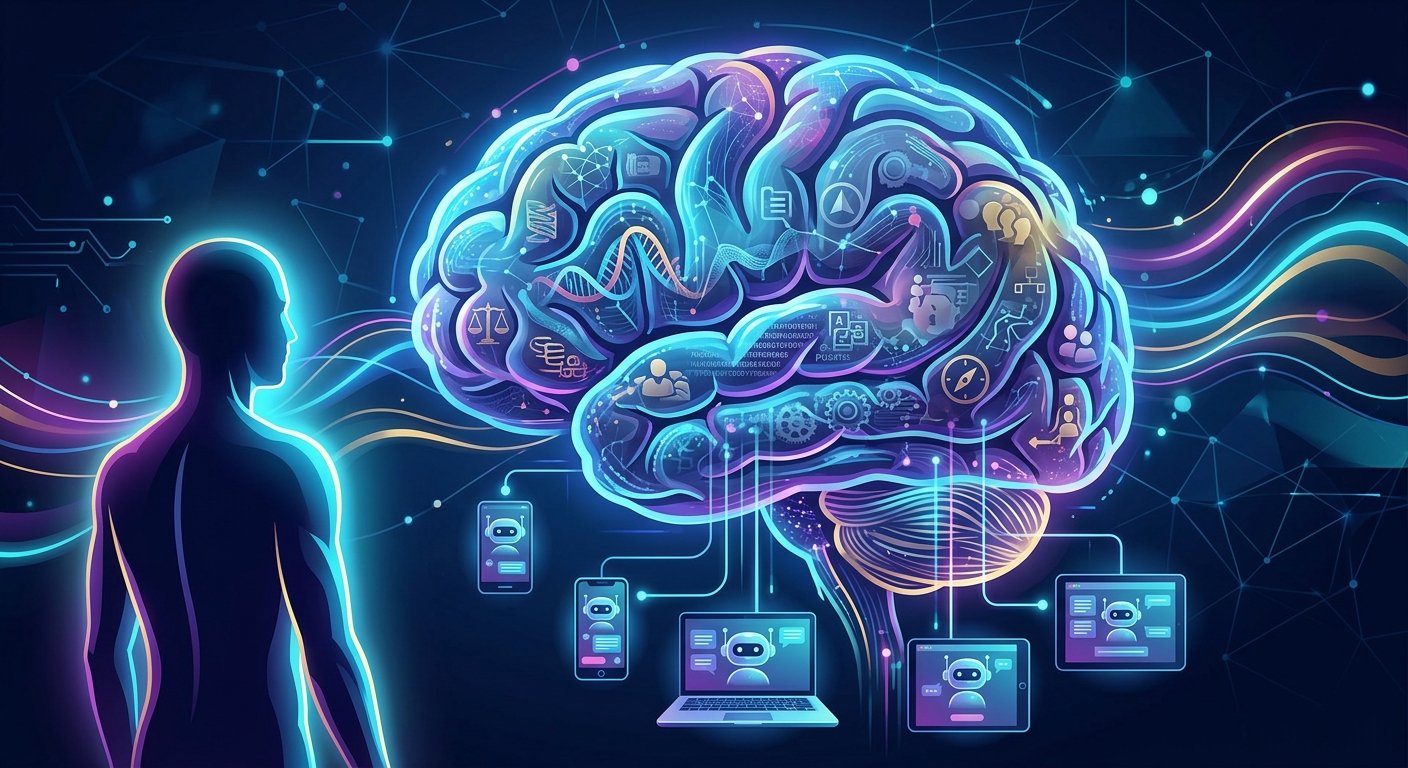
Millions of people type questions into AI chat tools every single day, yet most have no clear idea what is happening underneath. These tools are not search engines. They do not look things up in a database. They generate text based on patterns learned from enormous amounts of training data, and that distinction changes everything about how you should use, trust, and interpret what they say.
The surface of AI chat tools hides a much more complicated reality.
- AI chatbots generate text probabilistically, not by retrieving stored facts from a database
- Every model has a training cutoff date, meaning it has no awareness of events after a certain point
- Context windows, hallucination rates, and multi-modal capabilities vary dramatically between models and versions
Context Windows: The Hidden Memory Limit
One of the most misunderstood aspects of any large language model is the context window. Think of it as the model's working memory. It can only process a fixed amount of text at once, measured in tokens. A token is roughly three-quarters of a word, though that varies depending on the language and content type.
Early models had context windows of around 2,000 to 4,000 tokens. That was barely enough to hold a short conversation before earlier parts began disappearing. Current models support hundreds of thousands of tokens, with some handling over a million. The practical difference is enormous for anyone doing serious work with these tools.
Here is what that means for everyday users:
- If a conversation exceeds the context window, the model starts dropping or compressing earlier parts of your chat
- Long documents fed into the model may be partially ignored near the window's edge
- Larger context windows do not always mean better performance across very long inputs, since attention quality can degrade at the extremes
- A model cannot tell you when it has started forgetting something, it simply behaves as though the earlier text never existed
This is why you might notice an AI assistant contradicting something you told it several messages back. It is not a glitch in the intuitive sense. It is a hard architectural constraint built into how these systems process information.
Why Tokens Matter More Than Word Count
Tokens are not the same as words. A single long or uncommon word might count as three or four tokens. A single emoji can count as one. Code tends to tokenize more efficiently than prose. When developers and power users talk about model limits, they speak in tokens, not words, because that is the unit the model actually processes.
Understanding this helps explain why pasting a 20-page PDF into a chat window sometimes works brilliantly, and sometimes produces a noticeably weaker response toward the end. The model may simply be reaching its limit.
Training Cutoffs: Why Your AI Lives in the Past
Every AI language model is trained on data collected up to a specific date. After that cutoff, the model has no awareness of world events, new research, changing facts, or product changes. This is called the training cutoff, and it is one of the most misunderstood constraints in consumer AI tools.
A model trained with data through early 2024, for example, knows nothing about events that happened after that point, unless it has been given separate access to real-time search tools. Many chat interfaces now attach web search capabilities to address this limitation. But the underlying model itself remains frozen in time.
This creates a recurring trap. People ask AI assistants about recent stock prices, current laws, the latest research, or recent news events, and the model answers confidently using outdated information. It has no way to know the world has continued moving. According to large language model research documented by Wikipedia, these models are trained on massive text corpora collected before a fixed date, which is why the training cutoff is a fundamental architectural limitation rather than something that can simply be patched.
The Hallucination Problem: Confident and Wrong
Perhaps the most important thing to understand about AI chat assistants is that they can be completely, confidently wrong. This is called hallucination, and it is not caused by poor design or a failure to try hard enough. It is a natural consequence of how these systems generate text.
A language model predicts the most statistically likely sequence of words given the input it receives. Sometimes that prediction produces accurate, useful content. Sometimes it produces something that sounds authoritative but is factually false. The model cannot distinguish between those two outcomes because it has no separate fact-verification layer operating alongside the generation process.
Here are the most common hallucination patterns researchers have documented:
- Inventing citations with real authors but fake book or paper titles
- Producing plausible-sounding statistics with no real source
- Creating fictional court cases or legal precedents with convincing detail
- Describing events that never occurred with specific names, dates, and locations
- Attributing real companies or organizations with incorrect founding years or leadership histories
- Fabricating quotes from real public figures
The AI hallucination) Wikipedia article notes that the term itself is somewhat contested among researchers. Some argue it implies the model is perceiving something incorrectly, when in reality the model is simply generating plausible-sounding text with no ground truth check.
Hallucination rates vary significantly depending on the topic. On well-documented subjects with abundant training data, errors tend to be rarer. On niche historical figures, obscure scientific claims, or very specific technical details, errors become far more common. This is why subject-matter experts regularly catch errors that casual users accept without question.
Reducing Hallucination Risk in Practice
You cannot eliminate hallucinations, but you can work around them in ways that most users never bother with. Treating AI output as a first draft rather than a final answer makes a significant difference. Ask for sources, then verify them independently. If the model gives you a specific statistic, look it up elsewhere before repeating it.
Asking follow-up questions that probe for detail is also effective. Inconsistencies often surface quickly under scrutiny. A model that confidently named a book in one message may stumble when you ask it to describe a specific chapter.
Multi-Modal Capabilities: Far Beyond Text
The earliest AI chat tools were purely text-based. You typed, it responded. That era is largely over for the leading models, though most users still interact with these tools as if nothing has changed.
Modern AI assistants can often process images, audio, documents, and video alongside text. This is called multi-modal capability. A model that can see an image can describe it, read text within it, interpret a graph, or answer specific questions about its contents. Models that process audio can transcribe speech, identify tone, or generate spoken responses. Some generate images from text descriptions. Others extract structured data from PDFs or analyze spreadsheets.
The gap here is not in what models can do. It is in what users assume they can do. Most people who use AI chat assistants several times per week have never uploaded a document, shared a photo, or tried anything beyond a plain text prompt. If you want to see the actual range of what these tools handle in practice, trying a free AI chat tool directly is one of the fastest ways to understand what the technology can do, particularly the document and image features that most casual users never reach.
Temperature and Randomness: Why the Same Question Gets Different Answers
Here is something almost nobody outside the developer community discusses. AI language models do not give the same answer every time you ask the same question. There is a randomness parameter called temperature that governs how varied or predictable the model's output is.
At lower temperature settings, the model produces more consistent, conservative responses. At higher temperatures, responses become more varied and creative, but also less reliable for factual tasks. Most commercial AI chat interfaces operate somewhere in the middle by default, which is why you may get noticeably different responses across two identical prompts.
This is by design. It is not a bug. The model is doing exactly what it was configured to do.
Context Window vs. Training Cutoff: How They Differ
These two concepts often get conflated, but they affect completely different things.
| Feature | What It Affects | Can It Be Changed? |
|---|---|---|
| Context window | How much text the model processes per session | Yes, newer model versions extend it |
| Training cutoff | The model's awareness of world events | No, not without retraining or adding web access |
| Temperature setting | Consistency vs. creativity of responses | Yes, adjustable via API or interface settings |
| Multi-modal support | Input and output types the model accepts | Yes, varies significantly by model version |
Knowing which limitation you are hitting changes what you do about it. A context window problem calls for shorter conversations or chunked inputs. A training cutoff problem calls for web search or manual context. A hallucination problem calls for source verification. They are different constraints with different solutions.
The Facts Worth Carrying Forward
Understanding how these tools actually function changes how you use them. The people who get the most out of AI chat assistants are not the ones who trust them most. They are the ones who understand exactly where trust is warranted and exactly where it is not.
Context windows cap what a model can see in a single session. Training cutoffs mean the model's world knowledge stops at a fixed date. Hallucinations mean confident output still requires independent verification. Multi-modal features exist and most users have never touched them. Temperature means outputs are probabilistic, not deterministic.
None of this makes AI chat assistants less useful. It makes them more useful once you understand what you are actually working with. A tool used with accurate expectations is a tool used well.
Was this page helpful?
Our commitment to delivering trustworthy and engaging content is at the heart of what we do. Each fact on our site is contributed by real users like you, bringing a wealth of diverse insights and information. To ensure the highest standards of accuracy and reliability, our dedicated editors meticulously review each submission. This process guarantees that the facts we share are not only fascinating but also credible. Trust in our commitment to quality and authenticity as you explore and learn with us.