
Written by: The Editorial Team
Published: 27 Sep 2026
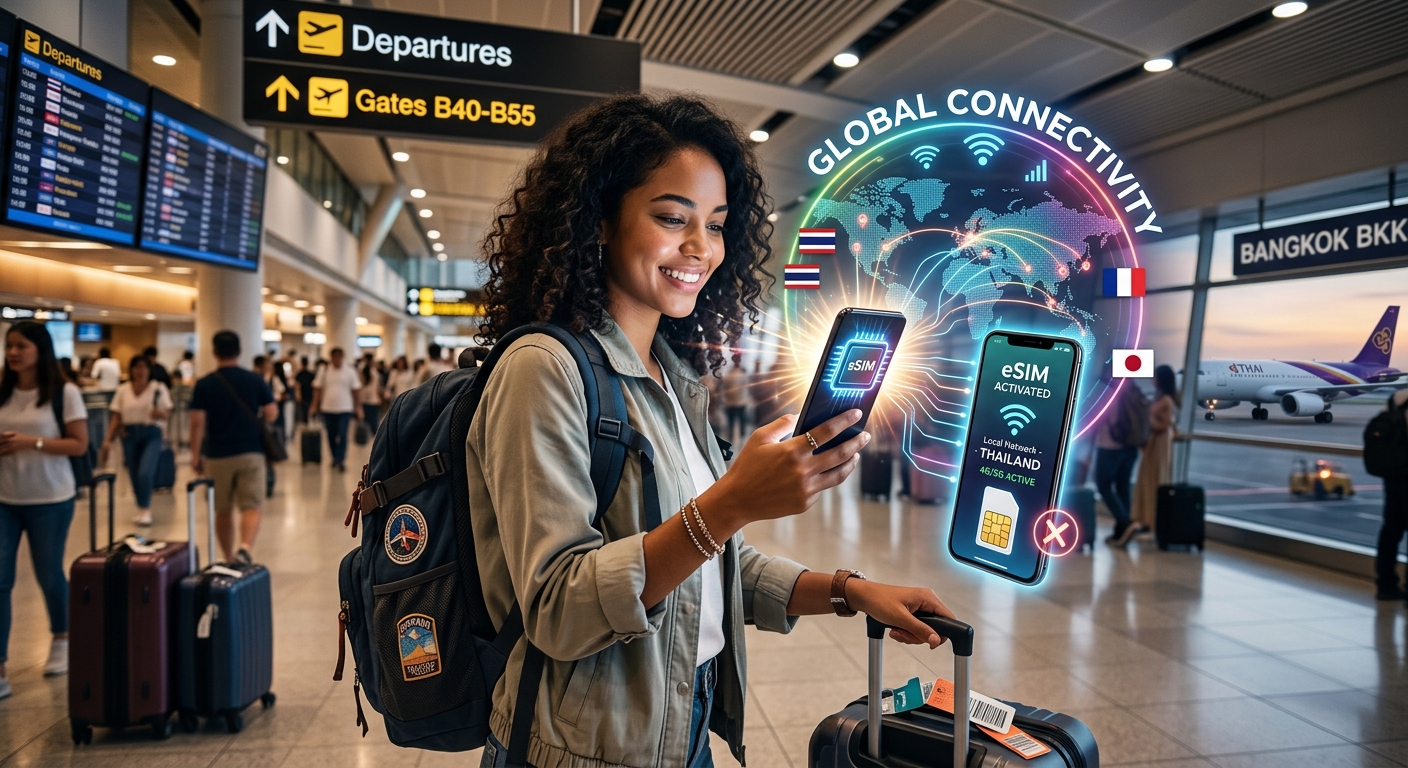
Most people replace a SIM card the same way they always have: pop out the tray, swap the tiny plastic chip, hope nothing falls on the floor. The eSIM throws that entire ritual out the window, and the speed of its adoption has caught even industry insiders off guard. If you travel with a smartphone, understanding how this technology actually works is more useful right now than it has ever been.
Key Facts:
1. The eSIM standard was finalized by the GSMA in 2016, but it took two more years before a mainstream phone fully embraced it.
2. Airlines, hotels, and airports are investing in eSIM-native connectivity because it lets them offer seamless data plans at the point of sale.
3. Switching carriers on an eSIM takes minutes and requires no physical hardware at all.
The Surprisingly Short History of a Global Standard
The idea of embedding a SIM directly into a device, rather than inserting a removable card, had been floating around the mobile industry for years before anyone acted on it seriously. The GSMA standardization of eSIM technology came together formally in 2016, giving manufacturers and carriers a common framework to work within.
That framework mattered enormously. Without a shared standard, an eSIM in a Samsung device might be completely incompatible with the activation systems used by a carrier in Germany. The standard meant that any compliant device could, in theory, work with any compliant carrier anywhere in the world.
The first widely recognized consumer device to ship with eSIM support was the Apple Watch Series 3, released in 2017. It was a logical starting point because a smartwatch has no room for a physical SIM tray. Then in 2018, Apple put eSIM support into the iPhone XS and XS Max alongside the traditional SIM slot. That dual approach, physical card plus embedded chip, gave nervous users a safety net while the ecosystem caught up.
How the Embedded Chip Actually Works
A physical SIM card is, at its core, a small piece of hardware that stores your identity on a carrier network. Pull it out, and you take your phone number and data plan with you. An eSIM does the same thing, but the chip never moves. It is soldered into the device at the factory.
What changes instead is the software profile loaded onto that chip. Your carrier writes a profile to the eSIM, and that profile tells the network who you are. When you want to switch carriers, the old profile gets replaced or deactivated, and a new one takes its place.
This is where the comparison between the two formats gets genuinely interesting. The differences in how eSIM vs SIM technology handles carrier switching are significant for travelers, because a physical SIM forces you to either buy a local card on arrival or pay roaming fees. An eSIM lets you add a local plan before your flight even lands.
Which Devices Were First and Why It Mattered
After Apple's early adoption, the rest of the industry moved quickly:
- Google's Pixel 2 added eSIM support in 2017, though it took longer to activate on most carriers
- Samsung began rolling out eSIM support across its Galaxy S series from 2018 onward
- Motorola, Huawei, and several other manufacturers followed within the next two years
- By 2022, Apple made the bold call to release eSIM-only iPhones in the United States, removing the physical SIM tray entirely
That last move was the inflection point. When a device ships with no tray at all, the entire question of "should I bother learning how eSIM works" disappears. You have no choice, and that forces both carriers and users to get comfortable with the technology fast.
Why Airlines and Hotels Are Now Paying Attention
Connectivity during travel used to be the airline's problem only in the broadest sense. You land, you figure out your own data situation. That is changing.
Several major airlines now partner with eSIM providers to offer data plans directly through their apps or booking flows. A passenger flying from London to Tokyo can purchase a Japan data plan at checkout, have it ready on their phone before departure, and connect the moment they clear customs. No SIM vending machines, no hunting for a convenience store.
Hotels are moving in the same direction. Some properties, particularly in business travel corridors across Asia and the Middle East, now include eSIM data credits as part of the room rate. The logic is simple: a guest who can connect instantly is a satisfied guest.
Airports have noticed too. Several major international terminals have added eSIM kiosks and staff trained to help travelers activate plans in minutes. The infrastructure is catching up to the technology rather than the other way around.
The Activation Experience Has Changed Completely
Getting a traditional SIM card while abroad used to involve a real checklist:
- Find a carrier store or kiosk
- Show your passport for registration in countries that require it
- Wait for the card to be cut to the right size if the shop is out of nano SIMs
- Transfer your old number or accept a new local one
- Restart your phone and hope it picks up signal
The process of installing an eSIM has compressed all of that into under two minutes. You scan a QR code, confirm the plan details, and the profile downloads over your existing connection. No postbox, no plastic card, no waiting. If you are still on the plane and connected to in-flight Wi-Fi, you can have your destination data plan active before the wheels touch the runway.
For frequent travelers, this is not a small convenience. It is a fundamental shift in how you manage connectivity across trips.
What the Numbers Say About Adoption
The growth curve for eSIM-compatible devices has been steep. According to GSMA Intelligence data on connected devices, eSIM-enabled consumer electronics shipments have grown year-over-year at rates that outpace the broader smartphone market. The embedded SIM is no longer a niche feature for flagship phones. It now appears in mid-range handsets, tablets, laptops, and an expanding range of IoT devices.
Carrier support has expanded in parallel. In 2019, only a handful of operators in major markets supported eSIM activation for consumer devices. By 2024, that number had grown to hundreds of carriers across more than 80 countries.
The travel SIM sector specifically has seen a wave of eSIM-native providers enter the market, offering plans that cover multiple regions under a single profile. A traveler heading from France to Thailand to Japan in a single month can buy one plan covering all three markets without ever touching a SIM card.
The Privacy and Security Angle Most People Miss
One underappreciated aspect of eSIM technology is what it means for device security. A stolen phone with a physical SIM allows the thief to pull the card and use it in another device immediately. An eSIM profile is tied to the device, not to a removable card, which makes that particular attack much harder to pull off.
There are trade-offs, of course. If your carrier has a poor eSIM activation portal, a plan transfer to a new phone when yours breaks can be more frustrating than swapping a physical card. The technology is robust, but it relies on carrier software infrastructure that varies widely in quality.
The Future That Already Arrived
The eSIM is not a technology on the horizon. It is already in hundreds of millions of devices in active use around the world. The surprising part is not that it works, it is how fast the travel industry has reorganized itself around it.
Airlines pricing eSIM data into ticket packages, hotels embedding connectivity credits into room rates, airports staffing kiosks specifically for eSIM support, all of that would have sounded like speculation just five years ago. The plastic SIM card had a good run. For travelers who care about staying connected without the hassle, the embedded alternative has already taken over.
Was this page helpful?
Our commitment to delivering trustworthy and engaging content is at the heart of what we do. Each fact on our site is contributed by real users like you, bringing a wealth of diverse insights and information. To ensure the highest standards of accuracy and reliability, our dedicated editors meticulously review each submission. This process guarantees that the facts we share are not only fascinating but also credible. Trust in our commitment to quality and authenticity as you explore and learn with us.