
Written by: The Editorial Team
Published: 7 Oct 2026
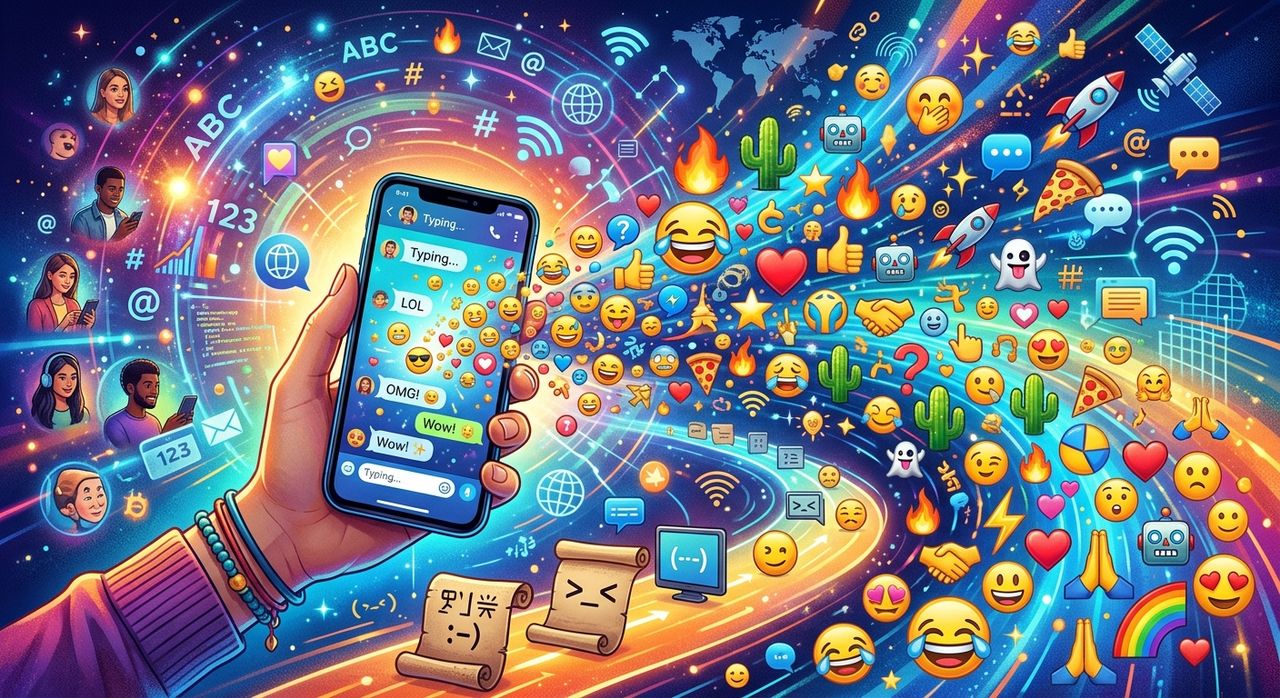
Emojis are everywhere. They show up in text messages, marketing emails, court documents, and even academic papers. What started as a tiny set of pixelated symbols on a Japanese mobile network has grown into a full visual language that billions of people use every single day. These 25 facts pull back the curtain on how emojis work, where they came from, and why they have fundamentally shifted the way humans talk to each other.
Key Takeaway: Emojis began in Japan in 1999, standardized by Unicode into a set that now exceeds 3,600 symbols. The laughing-crying face has dominated global usage since 2015. Apple and Google render the same character code in visually different ways, which can cause genuine miscommunication. Pre-emoji Japanese text art called kaomoji laid important cultural groundwork. Today, a small cluster of symbols accounts for the vast majority of all emoji usage worldwide.
Where It All Began: The Japanese Origins of Emoji
The word "emoji" is Japanese. It combines "e" (picture) and "moji" (character), giving you "picture character." That etymology matters because emojis were never intended as a novelty. They were a practical communication solution built for a specific technological problem.
In 1999, a designer named Shigetaka Kurita created the first emoji set for NTT DoCoMo, a Japanese mobile carrier. The original collection contained exactly 176 symbols, each measuring just 12 by 12 pixels. Kurita drew inspiration from manga, weather forecasting maps, and Chinese characters. His goal was simple: convey information efficiently on tiny screens with almost no text space available. The Museum of Modern Art in New York later acquired the original 176 emojis as part of its permanent collection, recognizing them as a genuine design achievement.
Before Kurita's grid of tiny pictures arrived, Japanese internet users had already been expressing emotion through text. The practice of kaomoji emoticons, text-based faces built from keyboard characters like (^\^) or (>\<), had been popular since the early 1980s. These symbols gave users a way to soften or clarify the tone of a message, something plain text simply could not do on its own.
How Unicode Made Emojis Universal
For years, emojis were locked inside Japanese phones. Different carriers had their own symbol sets, and those sets were not interoperable. A heart on one device could show up as a garbled string of characters on another. The chaos ended when the Unicode Consortium stepped in.
Unicode is the international standard that assigns a unique code point to every text character across all the world's writing systems. When the Consortium began encoding emojis in 2010, it gave each symbol a permanent address in the global character set. That meant any device, any operating system, and any app could agree on what a given code was supposed to represent. Suddenly, emojis could travel across platforms without breaking.
The Unicode Standard now includes more than 3,600 emoji characters spread across dozens of categories. That number grows every single year, because the Consortium reviews and approves new emoji proposals on an annual cycle. The process is formal, deliberate, and surprisingly competitive.
The Laughing-Crying Face and Its Unbeatable Reign
One fact surprises most people: the single most-used emoji in the world is the face with tears of joy. It has held the top position in global usage data since at least 2015. That is the same year Oxford Languages named it their Word of the Year, the first time a pictograph had ever received that distinction.
Why does it dominate? The laughing-crying face fills a specific communication gap. It signals that something is genuinely funny, not just mildly amusing. It works across age groups, cultural backgrounds, and language barriers. It travels well.
The category it belongs to, covering smileys and emotion, is consistently the most active Unicode group in everyday messaging. Faces that express joy, sadness, surprise, and warmth make up a disproportionate share of all emoji use worldwide, reflecting the core human drive to signal emotional state in conversation.
Apple vs. Google: Why the Same Emoji Looks Different on Every Device
Here is a fact that catches people off guard. When you send an emoji to someone on a different device, they may see something visually quite different from what you sent. Unicode assigns the character code, but it does not dictate the artwork. Each platform designs its own visual interpretation of the same symbol.
Apple, Google, Samsung, Microsoft, and other platform makers have all produced distinct emoji designs over the years. Sometimes the differences are subtle. Sometimes they are significant enough to change the meaning of a message entirely.
How Apple and Google Have Interpreted Key Emojis Differently
| Emoji | Apple Rendering | Google Rendering |
|---|---|---|
| Pistol | Toy water gun, blue and plastic | Matching water gun (updated 2018) |
| Grinning Face | Teeth visible, eyes slightly squinted | Eyes wider, expression reads warmer |
| Peach | Rounded shape, clearly fruit-like | More abstract, less obviously a peach |
| Party Popper | Sideways burst of confetti | More upright, streamers more visible |
| Nauseated Face | Deep green, eyes closed | Similar but slightly lighter tone |
The pistol redesign is one of the most consequential in emoji history. Apple changed its revolver to a toy water gun in 2016, a move that influenced other platforms to follow. That redesign changed the meaning of countless existing messages without any change to the underlying Unicode code point. The character stayed the same. The picture changed. The communication shifted.
Skin Tones, Gender, and the Push for Representation
Emoji diversity became a serious conversation around 2015, when Unicode introduced skin tone modifiers. Before that, human figures defaulted to yellow, a color originally intended to read as neutral, like a classic smiley face. The new modifiers, based on the Fitzpatrick skin tone scale used in dermatology, allowed users to select from five different tones for human emoji characters.
Gender-inclusive options followed. Many emoji that previously defaulted to a male appearance gained female and gender-neutral variants. Couples, families, and profession emoji expanded to reflect a wider range of identities. Each new variant adds to the total emoji count, which is one reason the number grows so quickly with each annual release.
The Mechanics of New Emoji Approval
Getting a new emoji approved is a formal process. Anyone can submit a proposal to the Unicode Consortium, but the bar is high. Proposals must demonstrate broad utility, show that the symbol cannot be replicated by combining existing emoji, and include documented evidence of usage demand. The review cycle typically takes a year or more from first submission to final release.
The Consortium has rejected emoji for being too specific, too similar to existing symbols, or lacking evidence of widespread need. Some of the most beloved additions today, including the pleading face and the pinching hand, went through multiple revision rounds before they were approved. Others, including a proposed needle and thread for a sewing emoji, were debated for years before reaching consensus.
The Cultural Weight of Emoji Usage
Emoji are not culturally neutral. Usage patterns shift significantly depending on geography, age group, and platform. French users have historically sent more heart emoji per capita than users in most other countries. Certain flag emoji are sent almost exclusively by users from the corresponding nations. The same symbol carries different connotations in different cultural contexts, which creates genuine room for misreading across borders.
Tracking popular emojis reveals a striking concentration. The red heart, the thumbs up, the sparkles, and a small cluster of face emoji account for a remarkable share of all emoji traffic across messaging apps worldwide. A very limited visual vocabulary does enormous communicative work at scale.
Emojis in Law, Science, and Beyond
Perhaps the most unexpected territory emoji have entered is legal proceedings. Courts in multiple countries have been asked to interpret the meaning of emoji in contract disputes, harassment cases, and criminal investigations. A winking face or a knife emoji has been introduced as evidence of intent. Legal scholars now study emoji semantics as a genuine subdiscipline, trying to establish how courts should weigh a symbol whose meaning varies by platform, context, and age group.
Academic researchers studying digital communication have found that receiving an emoji in a workplace message can increase the perceived warmth of the sender. It can also, depending on the context, reduce perceptions of professional competence. The same symbol carries different weight depending on who sends it, where it appears, and what surrounds it.
July 17 and the Annual Release Cycle
World Emoji Day is celebrated on July 17. The date was chosen because that is the date displayed on the Apple calendar emoji. Unicode typically coordinates new character releases around this time of year, making it a natural focal point for announcements and updated character sets.
Each annual release is assigned a version number. The additions reflect trends in culture, food, and conversation that the Consortium tracks over time. Recent releases have included a phoenix, a lime, a splatter of mushrooms, and a wireless network symbol, each chosen because proposal data suggested broad demand.
The Scale of Daily Emoji Use
The numbers are staggering. Widely cited estimates place daily emoji usage at over 10 billion sends across platforms including WhatsApp, Instagram, iMessage, and Facebook Messenger. Some messages contain more emoji than words. In some conversational styles, emoji have replaced words entirely, functioning as a shorthand dialect that the sender and receiver both understand without any shared spoken language.
The full history of emoji reads as a compressed version of how digital communication itself has evolved: from plain text to rich media to a fully formed visual vocabulary that operates alongside, and sometimes instead of, written language.
Why These 25 Facts Actually Matter
Emoji are not decoration. They are a communication layer that carries tone, nuance, and cultural meaning in contexts where words alone fall short. A period at the end of a text message now reads as cold or passive-aggressive to younger users. A thumbs up from a boss can feel dismissive. A red heart means something different than a brown one. These are not trivial concerns. They shape how people understand each other across the digital spaces where most communication now happens.
The fact that a 12-by-12-pixel set of symbols created for a Japanese mobile network in 1999 became the most widely used visual language in human history says something real about how people want to communicate. Direct, visual, and emotional expression is not a feature of digital life. It is the entire point. The emoji did not change that desire. It just gave it a standardized address in the Unicode table, and let it travel anywhere.
Was this page helpful?
Our commitment to delivering trustworthy and engaging content is at the heart of what we do. Each fact on our site is contributed by real users like you, bringing a wealth of diverse insights and information. To ensure the highest standards of accuracy and reliability, our dedicated editors meticulously review each submission. This process guarantees that the facts we share are not only fascinating but also credible. Trust in our commitment to quality and authenticity as you explore and learn with us.