
Written by: The Editorial Team
Published: 20 Aug 2026
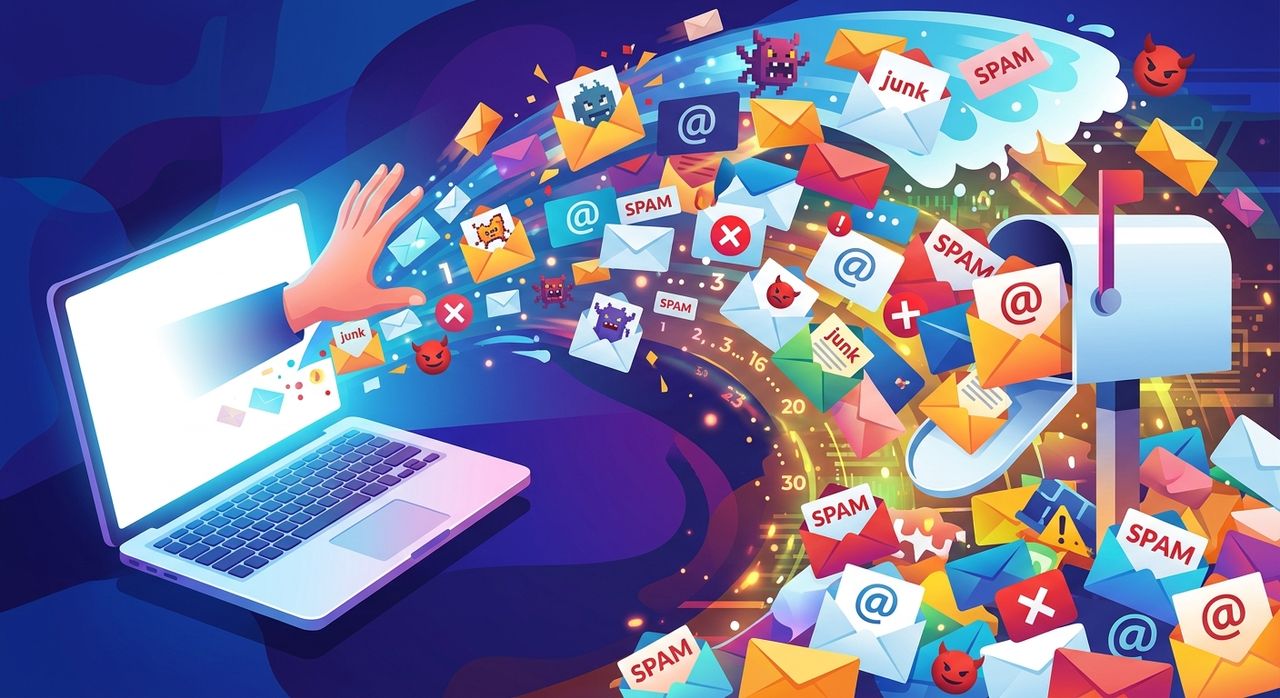
Your inbox fills up overnight. You wake up to a lottery win notification, a parcel you never ordered, and a prince who desperately needs your bank details. Spam email is one of the most persistent and surprisingly fascinating problems in the history of the internet. It wastes time, drains enterprise budgets, and occasionally tricks even tech-savvy people. Here are 30 facts that show just how vast, weird, and costly the spam world really is.
Key Facts:
1. Roughly 45 billion spam emails are sent every single day, making up nearly half of all global email traffic.
2. The Nigerian prince advance-fee scam generates an estimated $700,000 in revenue annually, mostly from a tiny fraction of recipients who respond.
3. Spammers use automated bots, purchased lists, and data breaches to harvest billions of email addresses at virtually zero cost.
Where the Word "Spam" Actually Comes From
The term has nothing to do with canned meat, technically. It comes from a 1970 Monty Python sketch in which the word "spam" is repeated so relentlessly that it drowns out all other conversation. Early internet users adopted the word to describe unwanted messages that flooded forums and inboxes in the same overwhelming way. The name stuck, and now it defines an entire category of digital nuisance.
The first recognised spam email was sent on May 3, 1978, by a Digital Equipment Corporation marketer named Gary Thuerk. He sent it to 393 ARPANET users to promote a computer. It was met with outrage. Not much has changed.
The Staggering Scale of the Problem
The numbers around spam are almost impossible to process at human scale.
According to research tracked on the email spam Wikipedia page, spam has at various points accounted for between 45% and 85% of all global email traffic. On peak days, that figure climbs even higher. Best estimates now put the daily volume at around 45 billion spam messages sent worldwide, every single day.
That is not 45 billion per year. Per day.
To give that number some context, the entire global population could receive roughly five spam emails each, every 24 hours, and that would account for the volume. Most of those messages are generated automatically by botnets, networks of compromised computers that act as unwilling spam relays without their owners having any idea.
The Nigerian Prince and Other Scam Economics
The advance-fee fraud, commonly called the 419 scam after the section of Nigerian criminal code it violates, is probably the most mocked scam in history. And yet it works. Studies have estimated that these schemes pull in around $700,000 annually across all their variants. The people who respond tend to lose large sums, which more than compensates the scammers for the enormous volume of messages they send to get a single reply.
The reason scammers send such obviously absurd messages is deliberate. They want to filter out skeptical people early. Only someone who finds the story credible will respond, which means the scammer's time is spent exclusively on the most persuadable targets.
That is a remarkably rational business logic built entirely on deception.
How Spammers Get Your Email Address
This is where the mechanics get genuinely unsettling.
- Web scraping bots crawl websites, forums, and comment sections looking for email addresses in plain text.
- Data breach dumps sell millions of verified addresses on dark web markets for pennies per thousand.
- Dictionary attacks combine common names and domains to generate probable email addresses, then probe them.
- Lead generation forms on shady websites collect and resell addresses without users realising it.
- Social media profiles are mined for contact information that users have made publicly visible.
- Purchased mailing lists are traded between marketers, some legitimate, some not, until addresses end up in the wrong hands.
Once your address is on a list, it circulates indefinitely. Addresses do not expire from spam databases. This is why an old email account you barely use still receives waves of junk.
The Cost to Businesses Is Enormous
Spam is not just annoying. It is expensive. Enterprise organisations spend significant budget on filtering infrastructure, security software, IT staff time, and the productivity lost when employees sift through junk or fall for phishing messages.
Estimates have placed the global economic cost of spam at tens of billions of dollars per year when you factor in all those categories together. A single successful phishing attack can cost a company far more than the annual IT security budget if it leads to a data breach.
Business Email Compromise, a targeted form of spam where attackers impersonate executives to trick employees into transferring money, has cost organisations billions globally. The FBI's Internet Crime Complaint Center consistently ranks it as one of the most financially damaging cybercrime types year after year.
What Spam Filters Are Actually Doing
Modern spam filters use a combination of sender reputation scoring, content analysis, machine learning, and blacklists to block unwanted messages before they reach your inbox. Gmail alone reports blocking around 100 million phishing emails per day. That is phishing alone, not total spam.
Filters are not perfect. Spammers adapt constantly. Image spam emerged specifically to defeat text-based filters by embedding the message inside an image file. Snowshoe spamming spreads messages across hundreds of IP addresses to avoid triggering volume-based blacklists. Every filtering advance is met with a counter-technique.
One practical approach that sidesteps address harvesting entirely is using spam protection tools that generate disposable inbox addresses, keeping your real email out of forms and signups where it might get scraped or sold.
The Geography of Spam
Spam does not come equally from everywhere. The United States, Russia, and China are consistently among the top sources of spam email by volume, partly because of their large internet infrastructure. But "source" is complicated when botnets are involved, because the machine sending the spam might be a home computer in one country, controlled by a server in a second country, on behalf of a criminal operation in a third.
Spam arrives in dozens of languages. English dominates, but Chinese, Russian, Japanese, and German spam are all significant in volume. Spammers target whichever languages correlate with the demographics they are trying to reach.
The Psychology Behind Why People Still Click
If spam did not work at all, it would have died out decades ago. The reason it persists is that even an extraordinarily low response rate is profitable at scale.
Researchers have found spam campaign conversion rates as low as 0.00001%, meaning one response per ten million emails. At 45 billion messages per day, even that fraction translates to thousands of responses globally. The cost of sending each email approaches zero once the botnet is running, so the economics stay favorable for the spammer even with near-zero engagement.
Urgency and fear are the main psychological levers. Messages that claim your account has been suspended, your package is being held, or your payment has failed all trigger an immediate reaction in people conditioned to handle those situations quickly.
Laws That Were Supposed to Fix This
The CAN-SPAM Act of 2003 in the United States established rules for commercial email, including requirements for opt-out mechanisms and honest subject lines. It helped somewhat. It did not solve the problem, partly because most spam originates outside US jurisdiction and partly because enforcement is resource-intensive.
GDPR in Europe, which came into force in 2018, tightened rules on email marketing consent for EU residents. Again, it helped with legitimate businesses sending unwanted marketing. It had almost no effect on criminal spam operations, which do not concern themselves with regulatory compliance.
Spear Phishing: When Spam Gets Personal
Generic spam is easy to ignore once you know what to look for. Spear phishing is different. It targets specific individuals using personal information gathered from social media, LinkedIn profiles, or previous data breaches. The message appears to come from a known colleague, a familiar service, or a manager within the organisation.
These attacks are far more convincing and far more dangerous. A spear phishing message might reference a real project the target is working on, use the correct internal terminology, and arrive from a spoofed address that looks identical to a legitimate one.
The Evolving Threat: AI-Generated Spam
The newest development in spam is one of the more troubling ones. AI language models are now being used to generate spam and phishing content that reads naturally, avoids the grammatical errors that used to be a reliable warning sign, and can be personalised at scale.
Where a phishing email once might have read as awkward or stilted, AI-generated versions can be polished, contextually appropriate, and nearly indistinguishable from legitimate correspondence. Security researchers have flagged this as a significant concern for the coming years.
Honeypot email addresses, which are addresses created purely to detect spam without ever being used by real people, continue to be used by researchers and ISPs to monitor spam behaviour and update filtering systems in response to new techniques.
30 Reasons Your Inbox Will Always Need Defending
Spam is not going away. The economics are too favorable, the technology too accessible, and the global legal landscape too fragmented for any single solution to eliminate it. But understanding how it works is genuinely useful. You make better decisions when you know why an urgent-sounding email deserves a second look, why signing up with your primary address on an unfamiliar website is a long-term cost, and why that Nigerian prince is still emailing people in 2026.
The facts here are not meant to alarm. They are meant to give you an accurate picture of something most people interact with every single day without thinking much about. Forty-five billion messages. Zero dollars per send. A fraction of a fraction of a percentage point in response rates. And still, somehow, it all adds up.
Was this page helpful?
Our commitment to delivering trustworthy and engaging content is at the heart of what we do. Each fact on our site is contributed by real users like you, bringing a wealth of diverse insights and information. To ensure the highest standards of accuracy and reliability, our dedicated editors meticulously review each submission. This process guarantees that the facts we share are not only fascinating but also credible. Trust in our commitment to quality and authenticity as you explore and learn with us.